
Conversion Rate in Jewelry: What's Normal and the Fixes
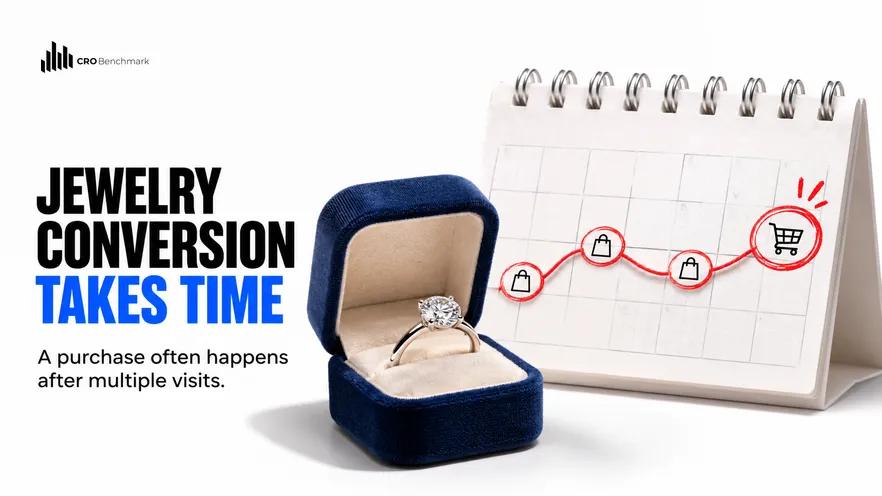
Consideration lag is defined as the elapsed time between a shopper first viewing a high-value item and buying it. Conversion rate in jewelry cannot be read without it, because a purchase routinely takes several sessions across days or weeks, so a per-session figure divides one sale by four visits the same person made. Baymard Institute research puts cart abandonment at roughly 70%, with unexpected costs and missing product information among the reasons shoppers give most often [Baymard Institute, 2025]. This guide covers how to establish your own normal, and the four fixes that move a researched purchase.
- Record consideration lag before judging your rate, because most sessions were never going to convert.
- Measure by visitor over a realistic window rather than by session.
- Read gift and self-purchase separately, since only one group knows the size.
- Publish internal diameter per ring size, which is the only reliable sizing method online.
- Put hallmarks, warranty and the returns route beside the price, as trust is the first blocker.
- Watch resize and return rate alongside conversion, because they decide whether a sale was profitable.
Thirteen years of audit work sit behind CROBenchmark, which now covers 7,000+ websites, 15+ industries and 248+ audit criteria [CROBenchmark Report 2026, Omniconvert]. Jewelry produces a particular complaint more often than any other vertical: the conversion rate looks alarming, and on inspection the business is healthy and the measurement is wrong.
What a normal conversion rate in jewelry really means
We publish the industry averages separately, in average ecommerce conversion rate by industry and ecommerce conversion rate benchmarks, and this page deliberately states no figure for jewelry. The method is what matters, and it is the one in a good conversion rate.
The arithmetic behind the low number is worth being explicit about. One buyer who visits four times before purchasing contributes four sessions and one order, so the session rate is a quarter of the visitor rate.
In impulse categories those two figures are close together. In jewelry they diverge sharply, which means comparing a jewelry store to a general retail benchmark compares two different denominators and concludes something false.
Three splits carry most of the diagnosis: gift versus self-purchase, price band, and new versus returning. Why averages mislead in general is in why industry averages mislead.
Measure the lag before you judge the rate
This measurement is usually absent, and adding it tends to end an argument that has been running for months. A team told their rate is below a category average will spend a quarter redesigning pages, when the honest finding is that their buyers take eleven days and four visits.
With the lag recorded, two things become possible. The rate can be measured over a window that matches real behaviour, and the research visits can be treated as a stage to be supported rather than as failures.
Supporting them is a practical job: a wishlist that works, a saved-item email that is useful rather than pushy, and a page that still answers the question when somebody returns to it a week later on a different device.
In a single A/B test with Omniconvert, PRISM+ reworked a listing page so televisions were grouped rather than listed flat, and across all devices the variant produced +40.74% conversion rate, +14.81% revenue per user and a 99.48% chance to win. [Omniconvert, PRISM+ case study] That is a consumer electronics testing result, and what carries across is that a high-value shopper comparing options responded to the comparison being made easier, rather than to any individual product being sold harder.
Trust is the first blocker, and it is answerable
Jewelry carries a quiet tax that other categories do not. The product is small, expensive, easy to misrepresent and historically bought from names people already knew.
Online that reverses into an opportunity for brands with real credentials, provided the credentials are visible. Assay marks, stated metal purity, a named workshop or country of manufacture, warranty length and a plainly worded returns window are the evidence a cautious shopper is looking for.
Most of that exists already, on a certificate in the box and in the founder's head, and nowhere on the product page. Moving it onto the page is a morning of writing.
| Group | What blocks the purchase | What moves it |
|---|---|---|
| First-time, self-purchase | Authenticity and recourse | Hallmarks, warranty, returns |
| First-time, gift | No sizing information | Gift path and easy exchange |
| Ring buyers, any | Cannot establish size | Internal diameter per size |
| High price band | Wants to see it first | Photography detail and policy |
| Returning researcher | Lost their shortlist | Working wishlist across devices |
| Seasonal gifting peak | Delivery date doubt | Cut-off dates stated early |
Shopify's variant guidance has pushed complete and consistent attributes across sales channels for years [Shopify, 2026], and dimension is the attribute this category omits most consistently.
The way jewelry teams most often misread this category is by reading a long consideration cycle as weak intent and responding with urgency messaging. Countdown timers and low-stock warnings on a four-hundred-pound ring read as pressure applied to somebody who is researching carefully, and they damage exactly the trust the purchase depends on. The same shopper responds well to a saved shortlist and a sizing answer, because both help them finish the research they were already committed to doing.
Sizing is arithmetic the page can publish
Fit failure here is expensive in a particular way. A returned ring is handled, inspected, sometimes resized, and the margin on the original sale is gone, so a sizing guess costs more than a sizing answer would have.
Shoppers guess because sizing systems disagree with each other and the one number that reconciles them is rarely published. Print internal diameter per size and a customer can measure a ring they already own in thirty seconds.
The same applies to chain lengths, bangle internal circumference and the drop on earrings. In each case a measurement replaces a judgement, and a judgement made badly comes back as a return.
Gifting is a different business in the same store
Gift sessions are identifiable without much effort: gift message use, separate delivery address, arrival from a gift guide, concentrated timing around a handful of dates.
Read separately, they usually convert well below the blended rate, and the cause is rarely price. It is a sizing question the buyer cannot answer and a delivery date they cannot confirm.
Both have cheap fixes: adjustable or size-free pieces grouped as a gift edit, an exchange process the recipient can start themselves, and delivery cut-off dates stated prominently in the weeks they matter.
What to do this week
- Record consideration lag. Days and sessions from first view to purchase.
- Re-measure by visitor. Over a window matching that lag, not per session.
- Publish internal diameter. Every ring size you sell, in millimetres.
- Move the credentials up. Hallmarks, warranty and returns beside the price.
Take a free reading from the CROBenchmark tool first, so a baseline exists before anything changes. For running the tests, Omniconvert Explore is the CRO platform for A/B and multivariate testing, personalisation, on-site surveys and session recordings, and an exit survey on high-value product pages is the quickest way to confirm whether trust or sizing is the blocker. Further upstream, once repeat rate, margin and channel have to be read together, Omniconvert Commander (formerly Nexus) is an AI for eCommerce growth engine that unifies commerce data, prioritises experiments by True Profit, and generates campaigns and creative you approve before they go live. The replenishment version of this analysis is conversion rate in pet, the fit-driven one is conversion rate in fashion, and to audit it step by step, start there.
Frequently asked questions
What is a normal conversion rate in jewelry?
Lower than almost any other retail category, and that is structural rather than a fault. A high-value considered purchase takes several visits across days or weeks, so most sessions were never going to convert. The figure worth tracking is your own, measured against itself, with the consideration lag recorded beside it.
Why does a session-based rate understate a jewelry business?
Because it divides purchases by every visit, including the four research visits a single buyer made before deciding. A store with a long consideration cycle looks worse than one selling impulse items at a fraction of the price, while making more money per visitor. Measuring by visitor over a realistic window corrects it.
What actually blocks a jewelry purchase?
Trust and sizing, in that order. A shopper spending several hundred with an unfamiliar brand is weighing a risk about authenticity and recourse, which is answered by hallmarks, warranty terms and a visible returns policy. Then comes sizing, which is arithmetic the page can simply publish.
How should gifting be measured?
Separately, because a gift buyer has none of the sizing information a self-purchaser has and converts on different terms. Gift sessions also arrive in short, intense windows with a different intent, so blending them across a year produces an average that describes neither group.
Does publishing measurements really move the rate?
Yes, and it moves returns further. Internal diameter in millimetres per ring size lets a shopper measure a ring they already own, which is the only reliable method available online. Guessing is what produces the resize requests and returns that erase the margin on the original sale.
Where should a jewelry store start?
By measuring consideration lag, then publishing specification and sizing on the five pieces carrying the most revenue. The first tells you whether your rate is a problem at all, and the second addresses the two blockers that are within your control this week.
Measure the lag, then print the millimetres
Before changing a single page, find out how many days and how many visits sit between a shopper first seeing a piece and buying it. In most jewelry stores that number ends an argument, because a rate that looked like a funnel problem turns out to be a research cycle being counted four times.
Then publish internal diameter for every ring size and move your hallmarks, warranty and returns terms up beside the price. Those two jobs take a day between them, they address the only two blockers you fully control, and they pay twice: once in conversion and again in the resizes that never happen.