
Product Page Power-Up: Optimizing for Conversions vs. User Experience
Product Page Power-Up: Optimizing for Conversions vs. User Experience
Product pages are the workhorses of any eCommerce store. They're where the rubber meets the road, where potential customers decide whether to click "Add to Cart" or bounce away. But what makes a truly effective product page? Is it all about driving immediate conversions, or should you prioritize the user experience (UX)? In this guide, we'll compare two approaches to product page design and optimization, helping you determine the best path for your eCommerce store.
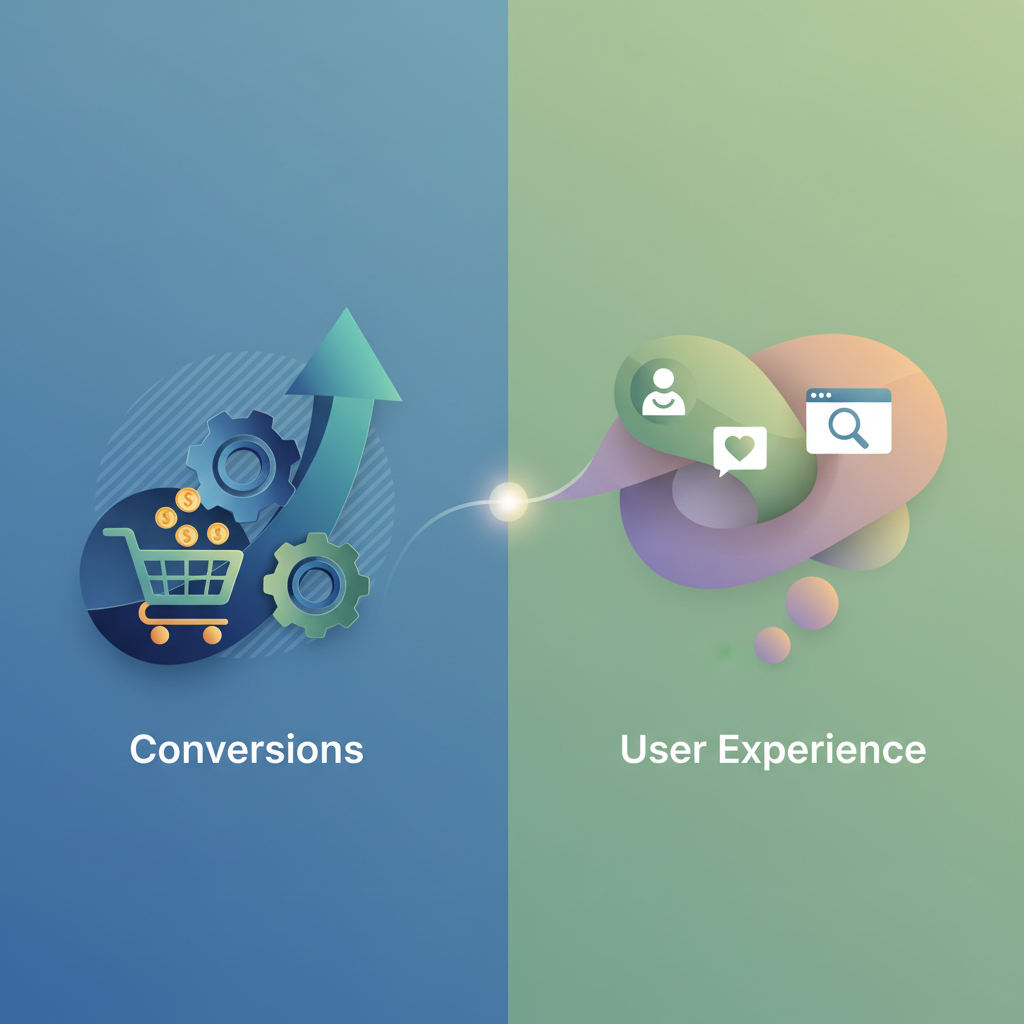
Conversion Rate Optimization (CRO) focuses on maximizing the percentage of visitors who take a desired action, such as making a purchase. This often involves tactics like clear calls to action, prominent pricing, and minimizing distractions.
User Experience (UX), on the other hand, prioritizes the overall experience a user has while interacting with your website. This includes factors like ease of navigation, visual appeal, and the overall feeling a user gets from the site.
Quick Comparison Table
| Feature | Conversion-Focused Product Page | User Experience-Focused Product Page |
|---|---|---|
| Primary Goal | Drive immediate sales | Build brand loyalty & long-term customer relationships |
| Focus | Clear calls to action, persuasive copy, limited distractions | Intuitive navigation, visually appealing design, seamless mobile experience |
| Metrics | Conversion rate, average order value, revenue per visitor | Time on page, bounce rate, customer satisfaction, repeat purchase rate |
| Testing | A/B testing variations of CTAs, pricing, and product descriptions | Usability testing, heatmaps, user surveys to understand user behavior and preferences |
| Examples | Concise product descriptions, multiple high-quality product images, prominent "Add to Cart" button | Detailed product information, customer reviews, videos, size charts, easy navigation to related items |
Overview of Conversion-Focused Product Pages
Conversion-focused product pages prioritize immediate sales. They are designed to remove any potential friction in the buying process and guide the customer directly to the checkout. The core principle here is to make it as easy as possible for the customer to buy the product. This approach often involves:
- Clear and Concise Copy: Focusing on the most important product features and benefits.
- Strong Calls to Action (CTAs): Using action-oriented language and prominent button placement.
- Minimal Distractions: Reducing the number of links, images, and other elements that might pull the customer away from the purchase.
- Urgency and Scarcity: Employing tactics like limited-time offers or low-stock notifications to encourage immediate action.
Tip: Analyze your website's data to understand where customers are dropping off in the purchase funnel. Are they abandoning their carts? Are they getting stuck on the product page? Use this information to inform your optimization efforts.
Example of Conversion-Focused Product Pages
Consider an eCommerce store selling high-end watches. A conversion-focused product page might feature:
- A large, high-quality image of the watch.
- A concise description highlighting key features (e.g., water resistance, Swiss movement).
- A prominent "Add to Cart" button with a clear call to action (e.g., "Buy Now").
- Limited information on related products to avoid distractions.
- Fast and easy checkout process to reduce cart abandonment.
Overview of User Experience-Focused Product Pages
User experience-focused product pages prioritize the overall customer journey. The goal is to create a positive and engaging experience that builds brand loyalty and encourages repeat purchases. This approach often involves:
- Detailed Product Information: Providing in-depth specifications, dimensions, and materials.
- High-Quality Visuals: Using multiple product images, videos, and 360-degree views.
- Customer Reviews and Ratings: Building trust and social proof.
- Easy Navigation: Allowing customers to easily find related products or additional information.
- Mobile Optimization: Ensuring a seamless experience across all devices.
Warning: While a great UX can increase customer satisfaction and repeat purchases, it's not always directly tied to immediate conversions. It's important to find a balance.
Example of User Experience-Focused Product Pages
An eCommerce store selling outdoor gear might prioritize UX by:
- Displaying detailed product videos demonstrating how to use the gear.
- Including customer reviews with photos and videos.
- Offering a size chart and fit guide to ensure the right purchase.
- Providing links to related products (e.g., a tent with a sleeping bag).
- Ensuring the website is fully responsive and mobile-friendly.
Feature-by-Feature Comparison
Let's break down the key features of each approach:
Product Descriptions
- Conversion-Focused: Keep it short and sweet. Highlight the key benefits and features that drive sales. Use persuasive language, and focus on the value proposition.
- UX-Focused: Provide detailed information, including technical specifications, materials, and care instructions. Tell a story about the product and its benefits, and create an emotional connection with the customer.
Visuals
- Conversion-Focused: Use high-quality images that showcase the product. Ensure the images are clear and accurately represent the product. Consider using a 360-degree view if applicable.
- UX-Focused: Use multiple high-quality images, videos, and 360-degree views. Show the product from different angles, and demonstrate its features in action. Use lifestyle images to help customers envision themselves using the product.
Calls to Action
- Conversion-Focused: Use clear and concise CTAs, such as "Add to Cart," "Buy Now," or "Shop Now." Make the buttons prominent and easy to find. Test different button colors, sizes, and placements.
- UX-Focused: Use CTAs that guide customers through the buying process, such as "Add to Cart," "View Details," or "Learn More." Consider using a progress bar to show customers where they are in the buying process.
Navigation
- Conversion-Focused: Minimize distractions by reducing the number of links and navigation options. Make it easy for customers to find the product they're looking for and quickly add it to their cart.
- UX-Focused: Provide easy navigation to related products, product categories, and other relevant information. Use breadcrumbs and internal links to help customers explore the website. Ensure the site is mobile-friendly and easy to navigate on all devices.
Customer Reviews
- Conversion-Focused: Display customer reviews prominently to build trust and social proof. Highlight positive reviews and address any negative feedback. Consider including a star rating.
- UX-Focused: Encourage customers to leave reviews and ratings. Make it easy for customers to find and read reviews. Respond to customer feedback and address any concerns.
Pricing: Which Approach Offers the Best Return?
Both conversion-focused and UX-focused approaches can be cost-effective, but they require different investments.
- Conversion-Focused: Requires investment in A/B testing, persuasive copywriting, and possibly more aggressive discounting or promotions. The return is often seen quickly in increased sales.
- UX-Focused: Requires investment in high-quality photography, video production, detailed product descriptions, and potentially a more complex website design. The return is often seen over time in increased customer loyalty, repeat purchases, and positive word-of-mouth.
Pro Tip: Don't be afraid to experiment. A/B test different product page layouts, copy variations, and visual elements to see what resonates best with your target audience.
Best For: Who Should Use Each Approach?
- Conversion-Focused: Best for businesses with a clear understanding of their target audience and products that sell themselves. Also ideal for time-sensitive promotions or flash sales where the goal is immediate conversions.
- UX-Focused: Best for businesses that sell complex products, build strong brand identities, and prioritize long-term customer relationships. Also ideal for businesses that want to differentiate themselves from the competition through a unique customer experience.
Important: Always consider the unique aspects of your product and target customer. For instance, a luxury brand might prioritize UX to create a high-end shopping experience, whereas a discount retailer might focus on conversions to drive volume sales.
Our Verdict: Finding the Right Balance
Ultimately, the best approach is to find a balance between conversion and user experience. Aim for a product page that is easy to navigate, visually appealing, and provides all the information a customer needs to make an informed purchase.
Here are some actionable takeaways:
- Prioritize Mobile Optimization: Ensure your product pages are fully responsive and provide a seamless experience on all devices. According to Statista, mobile commerce sales are projected to reach $710 billion in 2025 Statista. Therefore, a positive mobile experience is crucial.
- A/B Test Everything: Test different headlines, product descriptions, CTAs, and images to determine what converts best. A/B testing can lead to significant improvements in conversion rates.
- Use High-Quality Visuals: Invest in professional product photography and videos. This helps build trust and showcase your product in the best possible light.
- Make It Easy to Buy: Remove any friction from the buying process. Ensure the "Add to Cart" button is prominent, the checkout process is simple, and the payment options are clear.
- Gather Customer Feedback: Use surveys and customer reviews to understand what customers like and dislike about your product pages. This feedback can help you improve the user experience and drive more conversions. According to a study by the Baymard Institute, the average cart abandonment rate is nearly 70% Baymard Institute. Optimizing product pages is critical to combat this.
- Highlight Key Benefits: Focus on the features and benefits that matter most to your target audience. Use persuasive language to convince customers to make a purchase.
By focusing on both conversion optimization and user experience, you can create product pages that drive sales and build lasting customer relationships. It's not an either-or scenario; it's about finding the right balance for your brand and product.
Key Takeaway: The optimal approach involves a blend of conversion-focused tactics (clear CTAs, persuasive copy) and UX-focused elements (detailed information, high-quality visuals). This synergy maximizes both short-term sales and long-term customer loyalty.
If you're looking for a tool to help you audit your eCommerce store's performance and identify conversion leaks, consider using CRO Benchmark. It provides an AI-driven analysis of your website, including your product pages, and offers actionable insights and A/B testing ideas to improve your conversion rates.