
On-Page SEO vs. Off-Page SEO: Which Strategy Should You Prioritize in 2026?
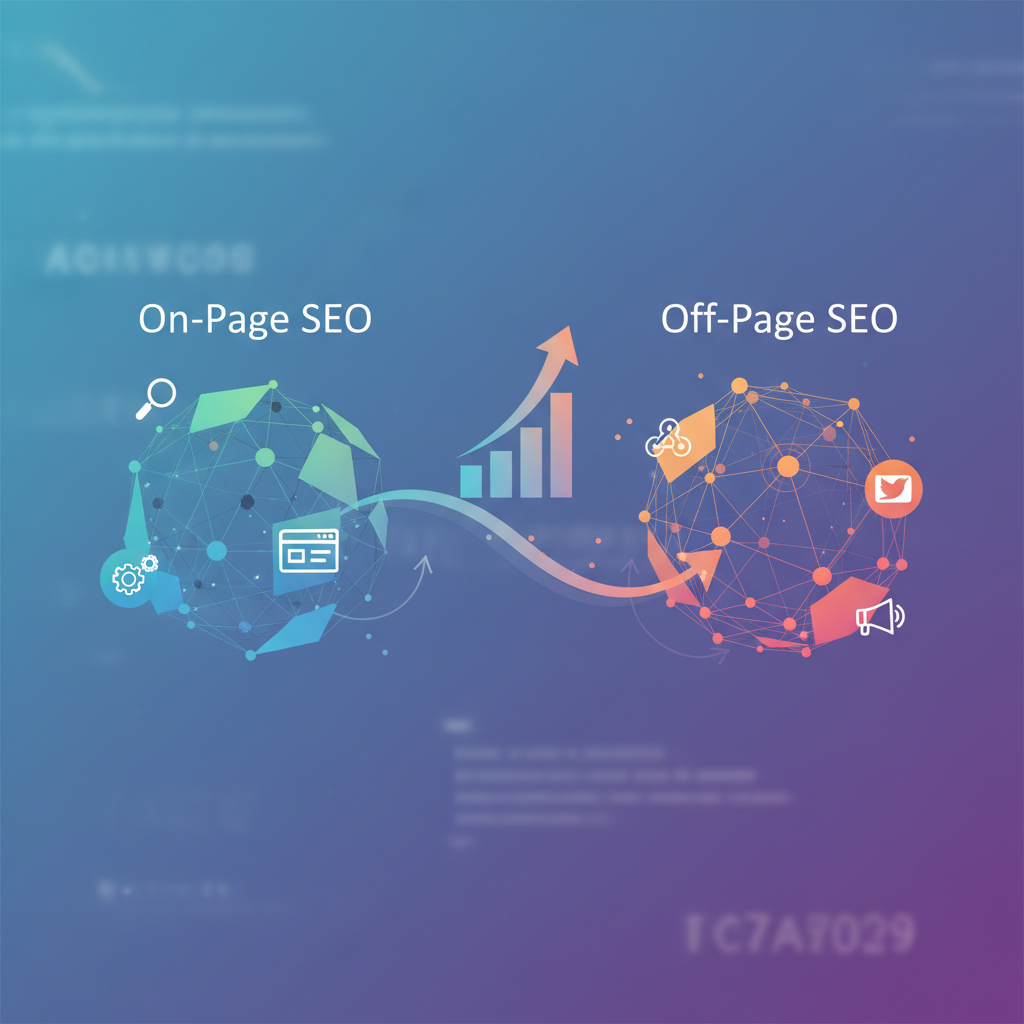
In the ever-evolving digital landscape, businesses are constantly seeking ways to climb the ranks of search engine results pages (SERPs). Two critical pillars support any successful SEO strategy: on-page SEO and off-page SEO. But which one should you prioritize? Is it a matter of one being more important than the other, or is it a matter of balance? This guide delves into a detailed comparison of on-page and off-page SEO, helping you understand their core differences, benefits, and how to effectively integrate them into your 2026 SEO strategy.
Quick Comparison Table
| Feature | On-Page SEO | Off-Page SEO |
|---|---|---|
| Focus | Website content and structure | Building authority and reputation |
| Control | High | Low |
| Key Elements | Keywords, content quality, site speed, HTML tags | Backlinks, social media, brand mentions |
| Primary Goal | Improve website's relevance and user experience | Increase website's authority and visibility |
Overview of On-Page SEO
On-page SEO encompasses all the optimization techniques you implement directly on your website. This includes optimizing your website's content, structure, and HTML to improve its ranking in search results and provide a better user experience. It's about making your website search engine-friendly, ensuring that search engines can easily understand what your website is about, and providing value to the user.
"On-page SEO is like building a strong foundation for your house. If the foundation is weak, the whole structure will suffer." - SEO Expert, 2024
Key components of on-page SEO include:
- Keyword Research & Implementation: Identifying relevant keywords that your target audience uses and strategically incorporating them into your content, headings, meta descriptions, and image alt tags.
- Content Optimization: Creating high-quality, engaging, and informative content that satisfies user intent. This includes blog posts, articles, product descriptions, and other forms of content.
- Technical SEO: Optimizing your website's technical aspects, such as site speed, mobile-friendliness, and website architecture, to improve crawlability and indexability. This involves optimizing website code, improving site loading speed, and ensuring a user-friendly website structure.
- User Experience (UX): Ensuring a positive user experience by optimizing website navigation, design, and content readability. This includes things like clear calls-to-action, a mobile-responsive design, and a user-friendly website structure.
The Importance of On-Page SEO
On-page SEO is crucial because it gives search engines the information they need to understand your website's content and relevance. It's the foundation upon which your SEO strategy is built. Without a well-optimized on-page SEO strategy, your website is less likely to rank high in search results, regardless of your off-page efforts. According to Search Engine Journal Search Engine Journal, a well-executed on-page SEO strategy can improve organic traffic by as much as 30%.
Overview of Off-Page SEO
Off-page SEO refers to all the activities you perform outside your website to improve its search engine rankings. This primarily involves building your website's authority and reputation through various tactics, such as link building, social media marketing, and online brand mentions. It's about showcasing your website's value and credibility to search engines and potential customers.
"Off-page SEO is like getting positive reviews for your business. The more positive reviews you have, the more trustworthy and reputable you appear." - Digital Marketing Consultant, 2024
Key components of off-page SEO include:
- Link Building: Acquiring backlinks from other reputable websites in your industry. Backlinks are a crucial ranking factor, as they signal to search engines that your website is a trusted source of information.
- Social Media Marketing: Building a strong social media presence and engaging with your target audience on social platforms. Social media signals can indirectly influence search rankings and drive traffic to your website.
- Brand Mentions: Getting your brand mentioned on other websites and online publications. Brand mentions, even without a direct link, can boost your website's visibility and brand recognition.
- Online Reputation Management: Monitoring and managing your online reputation, including responding to reviews and addressing negative feedback.
The Importance of Off-Page SEO
Off-page SEO is essential for building your website's authority and credibility. It signals to search engines that your website is a valuable and trustworthy resource. While on-page SEO focuses on optimizing your website for search engines, off-page SEO focuses on building relationships and promoting your website to a wider audience. Studies show that websites with strong backlink profiles rank significantly higher in search results. A recent study by Backlinko Backlinko found that the number of referring domains is the strongest ranking factor.
Feature-by-Feature Comparison
Let's dive deeper into a feature-by-feature comparison of on-page and off-page SEO:
Keywords
- On-Page SEO: Focuses on keyword research, strategic keyword placement within content and HTML tags, and optimizing for relevant search terms.
- Off-Page SEO: Indirectly benefits from keyword usage in backlinks and brand mentions, but primarily focuses on building authority rather than direct keyword optimization.
Content
- On-Page SEO: Requires creating high-quality, engaging content that satisfies user intent and includes relevant keywords. Content is king in on-page SEO.
- Off-Page SEO: Leverages content marketing to create valuable resources that attract backlinks and drive social shares. Content is used to build authority.
Technical SEO
- On-Page SEO: Involves optimizing website speed, mobile-friendliness, and site architecture. This ensures search engines can crawl and index your site effectively.
- Off-Page SEO: Has less direct influence on technical aspects but benefits from a well-structured website that provides a good user experience and is easy to navigate.
Backlinks
- On-Page SEO: Has no direct impact on backlinks.
- Off-Page SEO: Relies heavily on acquiring high-quality backlinks from authoritative websites. Backlinks are a primary ranking factor.
User Experience (UX)
- On-Page SEO: Prioritizes a positive user experience through website design, navigation, and content readability.
- Off-Page SEO: Indirectly benefits from a good UX, as it can lead to more social shares and brand mentions.
"A user-friendly website is more likely to rank higher in search results because it keeps users engaged." - Neil Patel, Digital Marketing Expert
Pricing
The costs associated with on-page and off-page SEO can vary significantly.
- On-Page SEO:
- In-house: Can be managed by your team, which reduces costs but requires time and resources for training and implementation.
- Freelancers/Agencies: Costs can range from a few hundred dollars to several thousand dollars per month, depending on the scope of work and expertise.
- Tools: SEO tools for keyword research and on-page analysis range from free to several hundred dollars per month.
- Off-Page SEO:
- In-house: Requires time and resources for link building, social media marketing, and brand monitoring.
- Freelancers/Agencies: Costs can be substantial, especially for link-building services. Pricing is based on the number of links acquired and the quality of the websites.
- Tools: Social media management tools and brand monitoring services range from free to several hundred dollars per month.
Tip: Consider a balanced approach to your SEO budget, allocating resources to both on-page and off-page activities to maximize your results.
Best For
- On-Page SEO: Best for improving your website's relevance and user experience, optimizing content, and enhancing technical aspects for search engines.
- Off-Page SEO: Best for building your website's authority, increasing visibility, and driving traffic from external sources.
Our Verdict
So, which strategy should you prioritize? The answer isn't a simple one. In reality, on-page and off-page SEO are not mutually exclusive; they are complementary. A successful SEO strategy requires a balanced approach, focusing on both. A strong on-page foundation is essential for search engines to understand your website's content and relevance. Off-page SEO then builds upon that foundation, increasing your website's authority and visibility.
In 2026, the key to success lies in integrating both strategies. Focus on:
- Creating High-Quality Content: Content is the cornerstone of both on-page and off-page SEO. Create valuable, informative, and engaging content that satisfies user intent and attracts backlinks.
- Optimizing for User Experience: Prioritize a positive user experience. Make sure your website is fast, mobile-friendly, and easy to navigate.
- Building a Strong Backlink Profile: Acquire high-quality backlinks from reputable websites in your industry. This is crucial for building your website's authority.
- Monitoring and Adapting: Continuously monitor your website's performance and adapt your strategy based on the latest SEO trends and algorithm updates.
"SEO is not a one-time task; it's an ongoing process. You must continually monitor your website's performance, adapt to algorithm changes, and refine your strategy to stay ahead of the competition." - Search Engine Land, 2024 Search Engine Land
By implementing a balanced SEO strategy that combines on-page and off-page optimization techniques, you can significantly improve your website's search engine rankings, drive organic traffic, and achieve your business goals in 2026 and beyond.
Actionable Takeaways
- Conduct thorough keyword research to identify relevant keywords for both on-page and off-page optimization.
- Optimize your website's content and structure for search engines and user experience.
- Build a strong backlink profile by acquiring high-quality backlinks from authoritative websites.
- Create a content calendar and publish high-quality, engaging content regularly.
- Monitor your website's performance using analytics tools and adapt your strategy as needed.
By focusing on these key areas, you can develop a robust SEO strategy that drives sustainable results and positions your website for success in the competitive online world.