
On-Page vs. Off-Page Optimization: Which SEO Strategy Should You Prioritize?
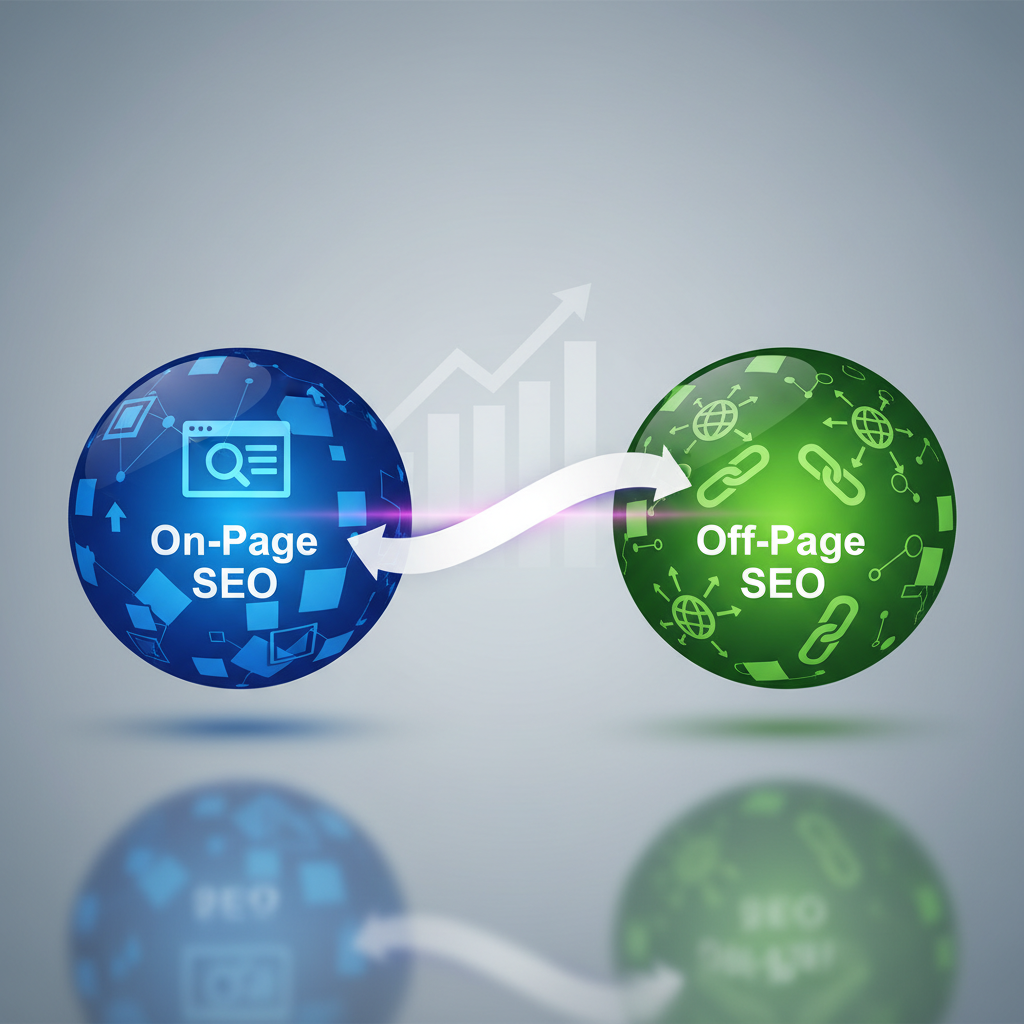
On-Page Optimization vs. Off-Page Optimization: Which SEO Strategy Should You Prioritize?
Are you wrestling with the complexities of search engine optimization (SEO)? Staying ahead in this ever-changing landscape requires a strategic approach. Two essential pillars of any successful SEO strategy are on-page optimization and off-page optimization. But which should you focus on first? This guide offers a detailed comparison to help you make informed decisions.
Quick Comparison Table
| Feature | On-Page Optimization | Off-Page Optimization |
|---|---|---|
| Focus | Website content, structure, and code | Building authority and reputation through backlinks |
| Control | Complete control over implementation | Limited control; relies on external websites and actions |
| Primary Goal | Improve website's relevance and user experience | Enhance website's credibility and search rankings |
| Examples | Keyword research, content creation, internal linking | Backlink acquisition, social media marketing |
| Time to Impact | Can be relatively quick, depending on implementation | Can take longer to see significant results |
Overview of On-Page Optimization
On-page optimization involves optimizing elements within your website to improve its search engine rankings. This includes optimizing content, HTML source code, and website architecture. The primary goal is to make your website more appealing to both search engines and users.
Key aspects of on-page optimization include:
- Keyword Research: Identifying the terms your target audience uses when searching for information related to your business.
- Content Creation: Developing high-quality, relevant, and engaging content that incorporates target keywords naturally.
- Title Tags and Meta Descriptions: Crafting compelling title tags and meta descriptions that accurately reflect your page content and encourage clicks.
- Header Tags (H1-H6): Using header tags to structure your content logically and improve readability.
- Image Optimization: Optimizing images with descriptive alt text and compressing them for faster loading times.
- Internal Linking: Linking to other relevant pages on your website to improve navigation and distribute link equity.
- Website Structure: Ensuring your website has a clear and logical structure that is easy for both users and search engines to navigate.
- Mobile Friendliness: Ensuring the website is responsive and provides a seamless user experience on mobile devices.
Tip: Regularly audit your website's on-page elements to identify areas for improvement. Use tools like Google Search Console to monitor your website's performance and identify any technical issues.
Overview of Off-Page Optimization
Off-page optimization focuses on activities performed outside of your website to improve its search engine rankings. This primarily involves building backlinks from other reputable websites.
Key aspects of off-page optimization include:
- Backlink Acquisition: Obtaining backlinks from authoritative websites in your niche.
- Social Media Marketing: Promoting your content and engaging with your audience on social media platforms.
- Online Reputation Management: Monitoring and managing your online reputation to ensure a positive brand image.
- Brand Mentions: Getting your brand name mentioned on other websites, even without a direct link.
- Guest Blogging: Contributing high-quality content to other websites in your niche.
Warning: Be cautious about using black-hat SEO tactics, such as buying backlinks, as this can lead to penalties from search engines.
Feature-by-Feature Comparison
Let's dive into a feature-by-feature comparison of on-page and off-page optimization:
1. Keyword Targeting
- On-Page: Focuses on incorporating target keywords within content, title tags, meta descriptions, and image alt text. This helps search engines understand what your page is about.
- Off-Page: Indirectly supports keyword targeting through link building. Backlinks from websites with relevant keywords in their anchor text can improve your website's rankings for those keywords.
2. Content Quality
- On-Page: Emphasizes creating high-quality, informative, and engaging content that meets user intent. This is crucial for attracting and retaining visitors.
- Off-Page: Content quality on other sites impacts the value of a backlink. A backlink from a high-quality site is more valuable than one from a low-quality site.
3. User Experience
- On-Page: Directly impacts user experience through website design, navigation, and content readability. A positive user experience can lead to lower bounce rates and higher engagement.
- Off-Page: Indirectly affects user experience. Backlinks from reputable websites can build trust and credibility, influencing user perception.
4. Website Authority
- On-Page: Contributes to website authority by improving content relevance and internal linking, helping search engines understand your website's structure and topic.
- Off-Page: Significantly impacts website authority through link building. Backlinks from authoritative websites signal to search engines that your website is a trusted source of information.
5. Technical SEO
- On-Page: Includes technical aspects like site speed, mobile-friendliness, and site structure. These factors affect both user experience and search engine crawling.
- Off-Page: Although not directly involved, a website's technical SEO can affect whether other sites link to it. A fast, mobile-friendly site is more likely to be linked to.
Pricing
- On-Page Optimization: Often involves the cost of content creation, SEO tools, and potentially hiring an SEO specialist or agency. Some on-page optimization tasks can be done in-house with free tools.
- Off-Page Optimization: Costs can vary widely. Building backlinks can involve the cost of outreach, content creation for guest posts, or hiring a link-building service. Some link-building efforts can be done for free (e.g., directory submissions), but often require significant time and effort.
Best For
- On-Page Optimization: Best for improving website relevance, user experience, and addressing on-site technical issues. It is a foundational element that ensures search engines can understand and index your content effectively.
- Off-Page Optimization: Best for building website authority, improving search rankings, and increasing organic traffic. Link building is crucial for establishing your website as a trusted source of information.
Our Verdict
Both on-page and off-page optimization are critical components of a successful SEO strategy. They work together to improve your website's visibility and attract organic traffic. However, they serve different purposes. On-page optimization focuses on optimizing your website's content and structure to make it more appealing to both search engines and users. Off-page optimization focuses on building your website's authority and credibility through link building and other external activities.
The ideal approach combines both strategies. Start with a solid foundation of on-page optimization to ensure your website is technically sound and has high-quality content. Then, invest time and resources in off-page optimization to build backlinks and improve your website's authority.
Actionable Takeaways
- Conduct Thorough Keyword Research: Use tools like SEMrush or Ahrefs to identify relevant keywords for your target audience. SEMrush is a popular tool.
- Create High-Quality Content: Develop informative, engaging, and well-structured content that incorporates your target keywords naturally.
- Optimize Title Tags and Meta Descriptions: Craft compelling title tags and meta descriptions that accurately reflect your page content and encourage clicks.
- Build High-Quality Backlinks: Focus on acquiring backlinks from authoritative websites in your niche. Guest blogging and outreach are effective strategies.
- Monitor Your Progress: Use tools like Google Analytics and Google Search Console to track your website's performance and identify areas for improvement.
- Prioritize Mobile-Friendliness: Ensure your website is responsive and provides a seamless user experience on mobile devices.
- Improve Site Speed: Optimize your website's loading speed to improve user experience and search engine rankings.
- Implement Internal Linking: Strategically link to other relevant pages on your website to improve navigation and distribute link equity.
- Stay Updated with SEO Best Practices: SEO is constantly evolving, so stay informed about the latest trends and best practices.
- Focus on User Experience: Create a website that is easy to navigate, provides valuable content, and offers a positive user experience.
By implementing these actionable takeaways, you can develop a comprehensive SEO strategy that drives organic traffic, improves search rankings, and achieves your business objectives.