
On-Page vs. Off-Page SEO: Which Strategy Should You Prioritize?
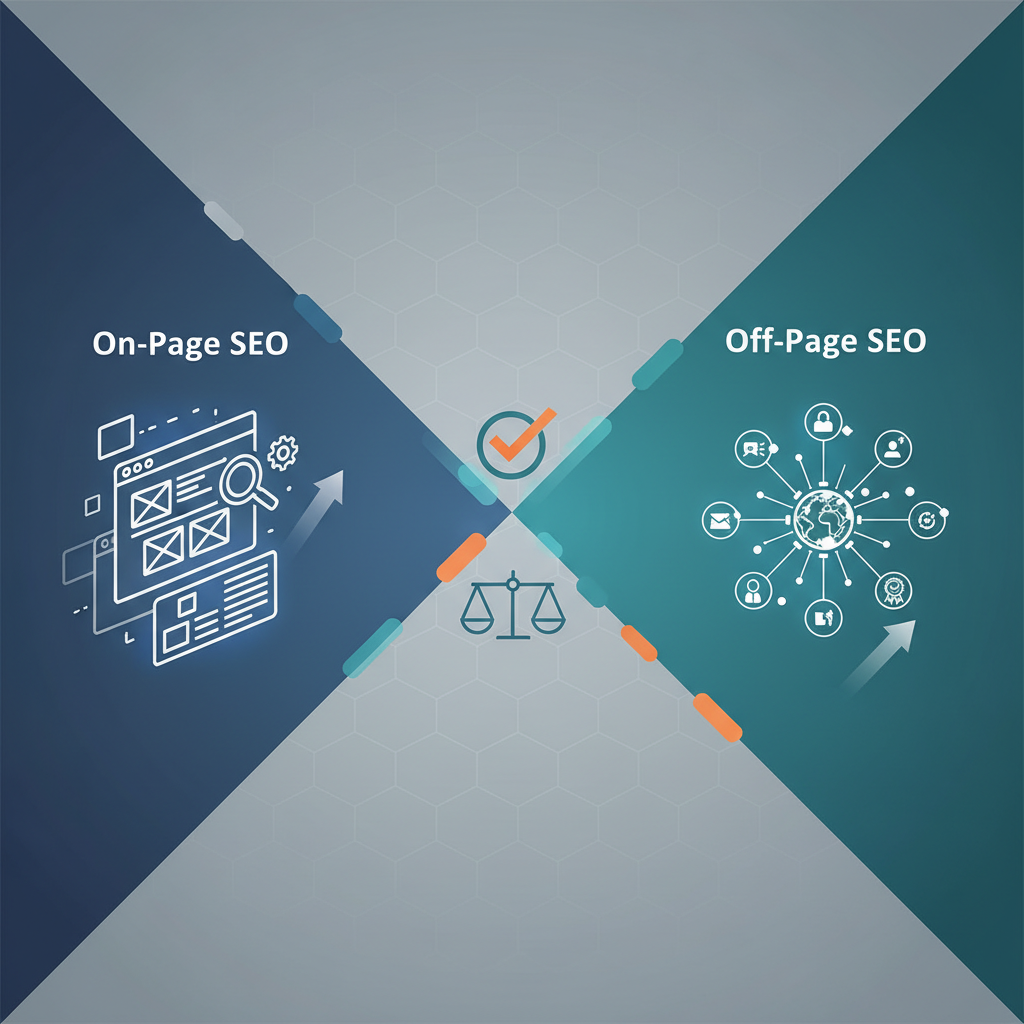
On-Page vs. Off-Page SEO: Which Strategy Should You Prioritize?
Struggling to climb the search rankings? You're not alone. The world of Search Engine Optimization (SEO) can feel like a maze, and figuring out which strategies actually work is tough. Two essential strategies are on-page and off-page SEO. But which one should you focus on first? This article cuts through the noise, giving you a clear understanding to build a winning SEO strategy. We'll explore the differences, compare their features, and help you decide which approach is best for your specific needs.
Quick Comparison Table
| Feature | On-Page SEO | Off-Page SEO |
|---|---|---|
| Focus | Website content and structure | Building authority and reputation |
| Key Activities | Keyword optimization, content creation | Link building, social media marketing |
| Control | High (you directly control your website) | Lower (reliant on external factors) |
| Speed of Results | Moderate (can see changes relatively quickly) | Slower (takes time to build authority) |
Overview of Each Strategy
On-Page SEO: Optimizing What's Within Your Control
On-page SEO means optimizing elements within your website to boost your search engine rankings. This covers everything from the words on your pages to the underlying HTML code. The main goal? To make your website as clear and relevant as possible to both search engines and users. By optimizing these elements, you increase the chances that search engines will understand what your website is about and rank it higher for relevant searches.
Key components of on-page SEO include:
- Keyword Research & Optimization: Identifying the terms people use when searching for information related to your business and strategically incorporating those keywords into your content, title tags, meta descriptions, and header tags.
- Content Creation: Developing high-quality, informative, and engaging content that provides value to your target audience. Content is king; without it, you're dead in the water.
- Website Structure: Ensuring your website has a logical and user-friendly structure with clear navigation, internal linking, and a sitemap to help search engines crawl and index your pages effectively.
- Technical SEO: Optimizing the technical aspects of your website, such as site speed, mobile-friendliness, and URL structure, to improve user experience and search engine rankings.
Tip: Regularly update your content to keep it fresh and relevant. Outdated content can negatively impact your rankings.
Off-Page SEO: Building Authority Beyond Your Website
Off-page SEO focuses on activities outside of your website to improve its credibility and authority in the eyes of search engines. This primarily involves building backlinks from other reputable websites and establishing a strong online presence. Think of it as earning "votes" of confidence from other websites. The more high-quality backlinks you have, the more likely search engines are to trust your website and rank it higher.
Key components of off-page SEO include:
- Link Building: Acquiring backlinks from other websites through various strategies, such as guest blogging, broken link building, and outreach.
- Social Media Marketing: Building a strong presence on social media platforms to increase brand awareness, engage with your audience, and drive traffic to your website.
- Online Reputation Management: Monitoring and managing your online reputation by responding to reviews, addressing negative feedback, and building positive relationships with your audience.
- Brand Mentions: Getting your brand mentioned on other websites, even if there isn't a direct link, can indirectly boost your rankings.
Warning: Avoid black-hat SEO tactics like buying backlinks, as these can lead to penalties from search engines.
Feature-by-Feature Comparison
Let's break down some key features of on-page and off-page SEO:
Keyword Optimization
- On-Page: This is where keyword optimization really shines. You have complete control over the keywords used in your content, title tags, meta descriptions, and image alt text. Careful keyword research is crucial, but so is natural integration.
- Off-Page: While you can't directly control keywords off-page, your brand mentions and the anchor text used in backlinks can influence the keywords search engines associate with your site. Building links from sites that use relevant keywords in their content is beneficial.
Content Quality
- On-Page: Content is the foundation. High-quality, informative, and engaging content is essential for attracting and retaining visitors. It also increases the likelihood of other websites linking to your content.
- Off-Page: Off-page activities can indirectly boost content quality by driving traffic and increasing brand visibility. Positive mentions and shares on social media can signal content value.
Link Building
- On-Page: On-page SEO supports internal linking, which helps search engines crawl your site and understand the relationship between different pages. It also makes it easier for users to navigate your site.
- Off-Page: Link building is the core of off-page SEO. The quality and quantity of backlinks have a significant impact on your website's authority and rankings.
User Experience
- On-Page: On-page SEO directly impacts user experience through website speed, mobile-friendliness, and clear navigation. A positive user experience encourages visitors to stay longer and explore more of your site.
- Off-Page: While off-page SEO doesn't directly control user experience on your website, a strong online presence and positive brand reputation can enhance user trust and engagement.
Technical SEO
- On-Page: Technical SEO, such as optimizing site speed and ensuring mobile-friendliness, falls squarely in the on-page category. This is critical for both user experience and search engine rankings.
- Off-Page: Off-page SEO has minimal impact on technical aspects, though a strong online reputation can indirectly support technical efforts.
Pricing
On-Page SEO
- Cost: The cost of on-page SEO can vary significantly. Some elements can be done in-house (free or very low cost), while others may require hiring an SEO specialist or agency.
- Time: On-page changes can often be implemented relatively quickly. However, seeing results can take several weeks or months, depending on the competitiveness of your keywords.
- Resources: Time and the potential cost of tools, content creators, or consultants.
Off-Page SEO
- Cost: Off-page SEO can also be done in-house (social media) but often involves costs for link building, content marketing, and brand monitoring.
- Time: Building a strong backlink profile and online presence takes considerable time. Results are typically seen over months or years.
- Resources: Time, budget for content creation, outreach, and potentially link-building services.
Best For
On-Page SEO is Best For:
- Improving Website User Experience: By optimizing site speed, mobile-friendliness, and content readability, you create a better experience for visitors.
- Targeting Specific Keywords: Keyword optimization allows you to focus on the search terms most relevant to your business and attract the right audience.
- Increasing Website Crawlability: Making it easier for search engines to crawl and index your site, ensuring all your content is visible.
Off-Page SEO is Best For:
- Building Brand Authority and Trust: Earning backlinks from reputable websites signals to search engines that your site is a reliable source of information.
- Expanding Reach and Visibility: Social media marketing and brand mentions can increase your brand's reach and attract new customers.
- Driving Referral Traffic: Backlinks and social media shares can drive traffic from other websites and platforms.
Our Verdict
So, which SEO strategy should you prioritize? The answer isn't a simple one. In reality, both on-page and off-page SEO are essential for a successful SEO strategy. They work in tandem to improve your website's visibility and drive organic traffic.
Think of it like building a house: On-page SEO is the foundation and the internal structure, while off-page SEO is the landscaping and the curb appeal. You need both to create a valuable and attractive property.
Here's a breakdown:
- On-Page SEO: Focus on optimizing your website's content, structure, and technical aspects. This is the foundation upon which your SEO success is built. Without a solid on-page foundation, off-page efforts will be less effective.
- Off-Page SEO: Concentrate on building your website's authority and reputation through link building, social media marketing, and online reputation management. This is what helps you stand out from the competition and earn the trust of search engines and users.
According to a study by SEMrush, backlinks are a top-ranking factor, emphasizing the importance of off-page SEO SEMrush. However, without well-optimized content, those links won't deliver the best results.
To achieve the best results, create a balanced strategy that gives both on-page and off-page SEO the attention they deserve. Here is a simple example of how to combine the two:
- Keyword Research: Start with on-page by identifying relevant keywords.
- Content Creation: Create high-quality content optimized for those keywords.
- On-Page Optimization: Optimize your content with the keywords.
- Off-Page Promotion: Promote your content through social media and outreach to build backlinks.
- Monitor and Analyze: Track your progress and make adjustments as needed. Always be testing.
"SEO is a marathon, not a sprint," says Neil Patel, a well-known SEO expert. "Consistency and a holistic approach are key."
By focusing on both on-page and off-page SEO, you'll be well on your way to improving your website's rankings, attracting more organic traffic, and achieving your business goals.
Actionable Takeaways
- Audit Your Website: Conduct a thorough audit of your website's on-page and off-page SEO. Identify areas for improvement.
- Prioritize Keyword Research: Use keyword research tools to identify the most relevant and valuable keywords for your business.
- Create High-Quality Content: Develop informative and engaging content that provides value to your target audience.
- Build a Diverse Backlink Profile: Focus on acquiring backlinks from reputable websites in your industry.
- Monitor Your Results: Track your website's rankings, traffic, and conversions to measure the effectiveness of your SEO efforts.
By implementing these strategies, you can create a comprehensive SEO strategy that drives sustainable growth for your business. Remember that SEO is an ongoing process. You must continually adapt your strategies to stay ahead of the curve and maintain your rankings.