
How to Optimize Your Landing Page for Conversions in 5 Steps
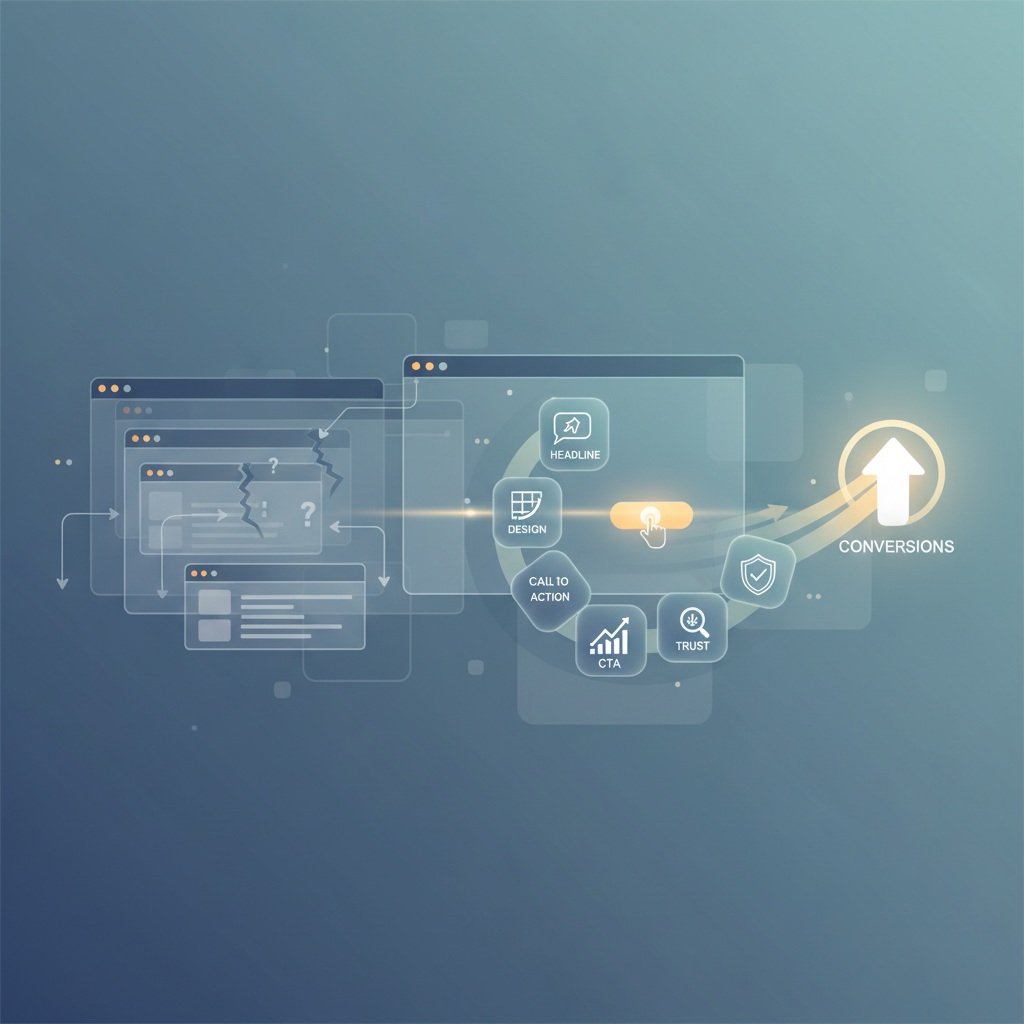
Ever feel like you're shouting into the void with your landing page? You pour your heart and soul into it, but visitors just... bounce. Sound familiar? Low conversion rates can be a real headache, often stemming from a confusing design or a lack of compelling content. But what if there were a few simple tweaks that could dramatically boost your conversion rates? This guide will walk you through five crucial steps to optimize your landing page for maximum impact.
What You'll Achieve
In this tutorial, you'll learn how to:
- Identify key elements of a high-converting landing page.
- Craft compelling headlines and value propositions.
- Optimize your design for usability and engagement.
- Implement effective calls to action.
- Continuously test and refine your landing page for optimal performance.
Before You Start
Before you begin, make sure you have the following:
- A website or platform where you can create and modify landing pages.
- Access to analytics tools (e.g., Google Analytics) to track your results.
- A solid understanding of your target audience and their needs.
Step 1: Nail Your Headline and Value Proposition
Your headline is your first shot at grabbing attention. It needs to instantly communicate the value you offer and entice visitors to learn more. A strong value proposition explains why your product or service is the best choice.
- Focus on Benefits: Instead of listing features, highlight how your product solves a problem or improves their life. For example, instead of "Our software has 20 features," try "Save time and increase productivity with our intuitive software."
- Keep it Clear and Concise: Ditch the jargon and complex language. Get straight to the point.
- Use Action Verbs: Kick off your headline with strong action verbs to create a sense of urgency and encourage engagement.
Here's what most guides get wrong: They focus on the what instead of the why. Make sure your headline speaks directly to your audience's needs.
Consider these stats:
- Landing pages with multiple offers have a conversion rate of 11.45%, according to WordStream WordStream.
- Personalized landing pages see a 10% lift in conversion rates, as reported by Instapage Instapage.
Pro Tip: Test different headlines and value propositions to see which ones resonate best with your audience. Use A/B testing to compare different versions and identify the most effective messaging.
Step 2: Design for a Stellar User Experience
A visually appealing and user-friendly design is critical for keeping visitors engaged. A cluttered or confusing design can send them packing in seconds. Make sure your design is clean, easy to navigate, and mobile-friendly.
- Visual Hierarchy: Use headings, subheadings, and bullet points to guide the reader's eye and break up large blocks of text. Ensure the most important information is visually prominent.
- Whitespace: Don't be afraid to use whitespace (the empty space around elements) to create a clean and uncluttered look. It makes the page easier to scan and digest.
- Mobile Optimization: Because mobile devices account for a significant portion of web traffic, your landing page must be responsive and load quickly on all devices.
Tip: Thinking about using dark mode? While I couldn't find hard numbers, a Reddit user noted a significant increase in click-through rates on their landing page when using a dark mode hero image. Specifically, the dark mode version saw a 4.2% click-through rate, compared to 2.8% for the light mode version Reddit
Step 3: Integrate High-Quality Visuals
Images and videos can seriously boost engagement and convey your message more effectively than text alone.
- Use Relevant Images: Choose high-quality images and videos that are relevant to your offer and visually appealing. Avoid generic stock photos.
- Optimize for Speed: Large images can slow down your page load time. Compress images and use appropriate file formats to optimize for speed.
- Consider Video: Videos can be highly effective in conveying your message and keeping visitors engaged. Use videos to showcase your product, explain your value proposition, or tell your brand's story.
Tip: A/B test different visuals to see which ones perform best. Experiment with images, videos, and illustrations to find the winning combination.
Step 4: Craft a Clear and Concise Call to Action (CTA)
Your call to action is the most important element on your landing page. It tells visitors what you want them to do. Make it clear, concise, and compelling.
- Use Action-Oriented Language: Use strong action verbs like "Get Started," "Sign Up," or "Download Now."
- Make it Visually Prominent: Use a contrasting color for your CTA button and ensure it stands out from the rest of the page.
- Create a Sense of Urgency: Use phrases like "Limited Time Offer" or "Get Yours Today" to encourage immediate action.
Let's be honest— a weak CTA is like whispering in a crowded room. You need to shout! According to HubSpot, calls to action are an essential element of any landing page HubSpot.
Tip: Place your CTA above the fold (the part of the page visible without scrolling) so visitors see it immediately. Also, consider placing it multiple times throughout the page.
Step 5: Test, Analyze, and Iterate (Rinse and Repeat)
Landing page optimization is an ongoing process. You must continuously test, analyze, and iterate to improve your results.
- A/B Testing: Test different versions of your landing page to see which one performs best. Test headlines, value propositions, CTAs, images, and more.
- Analyze Your Data: Use analytics tools to track your conversion rates, bounce rates, and other key metrics. Identify areas for improvement.
- Iterate and Refine: Based on your data, make changes to your landing page and test again. Continue this process until you achieve optimal results.
Tip: Use tools like Google Optimize or Optimizely to conduct A/B tests and gather data.
Troubleshooting
- Low Conversion Rates: If your conversion rates are low, review your headline, value proposition, design, and CTA. Make sure your messaging is clear, concise, and compelling.
- High Bounce Rates: If your bounce rate is high, your page may not be relevant to your target audience, or it may be difficult to navigate. Review your content and design to make sure it's user-friendly.
- Slow Page Load Times: Slow page load times can drive visitors away. Optimize your images, use a content delivery network (CDN), and minimize the use of scripts and plugins.
Next Steps
- Implement these steps on your landing pages. Start with your most important pages and gradually optimize the rest.
- Monitor your results. Track your conversion rates and other key metrics to measure your progress.
- Continue testing and refining. Landing page optimization is an ongoing process, so keep experimenting to improve your results.
By following these five steps, you can significantly improve your landing page conversion rates and achieve your marketing goals. Remember to focus on providing value, creating a user-friendly experience, and continuously testing and refining your approach.