
5 eCommerce Trends Reshaping Conversion Optimization
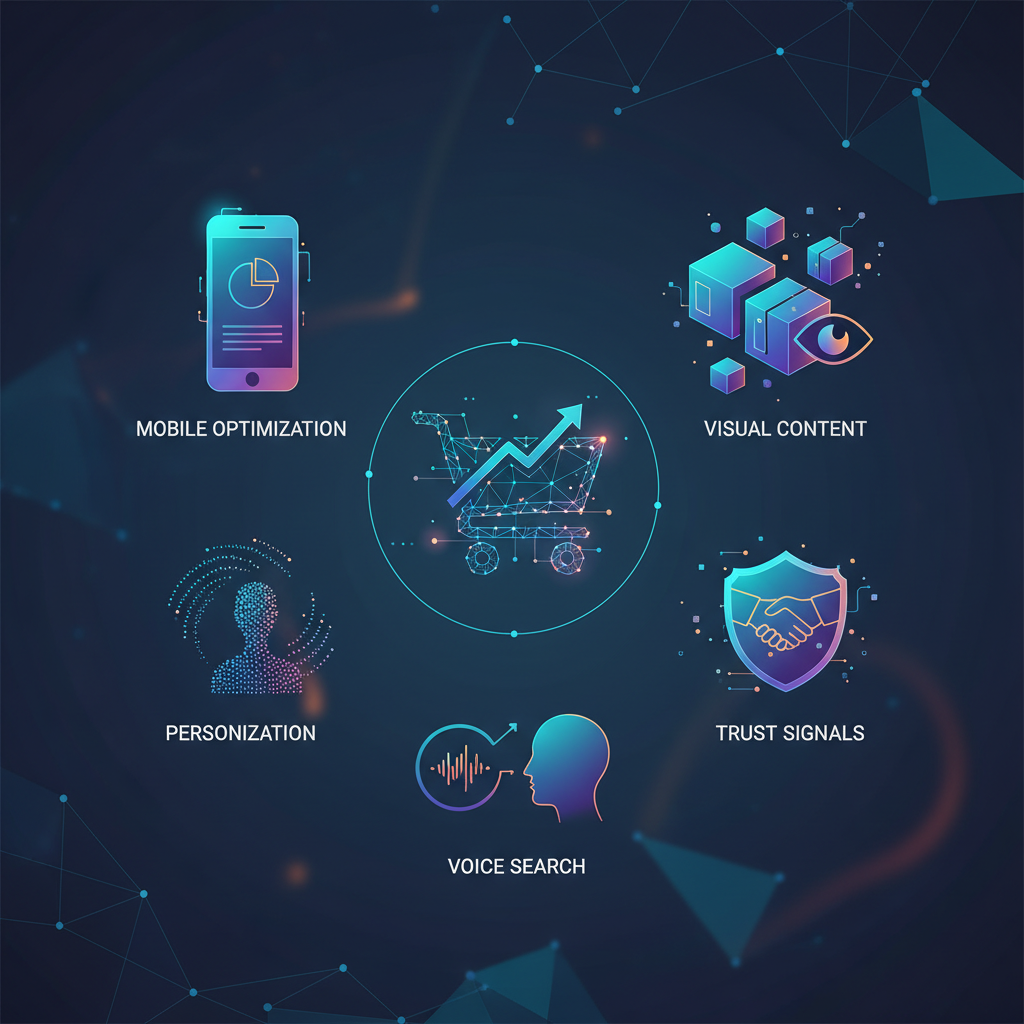
In the fast-paced world of eCommerce, staying ahead of the curve is crucial for sustained growth. Conversion Rate Optimization (CRO) is no longer a luxury; it's a necessity. With the landscape constantly shifting, understanding the latest trends and adapting your strategies accordingly is paramount. This guide dives into five key eCommerce trends reshaping conversion optimization, offering actionable insights and real-world examples to help you thrive.
1. The Rise of Mobile-First Experiences
Mobile commerce continues its relentless ascent, as consumers increasingly turn to their smartphones and tablets for online shopping. This shift demands a mobile-first approach to CRO. Websites and apps must be flawlessly optimized for mobile devices to capture and convert these on-the-go shoppers. Failure to do so means lost sales and missed opportunities. Sound familiar?
"The mobile share of eCommerce sales is expected to reach 72.9% by 2025." - Statista
This statistic underscores the importance of a seamless mobile experience. A slow-loading website, clunky navigation, or forms that are difficult to fill out on a small screen can quickly drive potential customers away. It's imperative that eCommerce businesses prioritize mobile optimization across all aspects of their online presence.
- Key Considerations:
- Page Speed: Optimize images, use browser caching, and minimize code to ensure fast loading times on mobile devices.
- Responsive Design: Implement responsive design principles to ensure your website adapts seamlessly to different screen sizes.
- Mobile-First Indexing: Google prioritizes mobile-first indexing, meaning it primarily uses the mobile version of your website for indexing and ranking. Ensure your mobile site is up to par.
- Simplified Checkout: Streamline the checkout process on mobile. Reduce the number of steps, offer guest checkout options, and integrate mobile payment solutions like Apple Pay and Google Pay.
2. Personalization Takes Center Stage
Customers crave personalized experiences. They want to feel understood and valued by the brands they interact with. Personalization in eCommerce goes far beyond simply addressing customers by their name in an email. It involves tailoring the entire shopping journey to individual preferences and behaviors.
"Personalized product recommendations can increase conversion rates by up to 10%." - Barilliance
Personalization isn't just a “nice-to-have”; it's a critical component of a successful CRO strategy. By analyzing customer data, eCommerce businesses can create targeted product recommendations, display personalized content, and offer customized promotions.
- Personalization Strategies:
- Product Recommendations: Use data to suggest products that align with a customer's past purchases, browsing history, and expressed interests.
- Dynamic Content: Display different content variations based on user segments, such as location, demographics, or purchase history.
- Personalized Emails: Send targeted email campaigns with product recommendations, exclusive offers, and abandoned cart reminders.
- Behavioral Targeting: Trigger specific actions based on user behavior, such as displaying a pop-up with a discount code when a customer is about to leave the site.
3. The Power of Visual Commerce
In a world saturated with information, visual content is king. High-quality images, videos, and interactive elements capture attention and engage customers more effectively than text-heavy descriptions. Visual commerce transforms the shopping experience, allowing customers to “see” themselves using a product and making more informed purchasing decisions.
"eCommerce product pages with videos have an 80% higher conversion rate." - MarketingSherpa
Videos, in particular, are powerful tools for driving conversions. They can showcase products in action, provide tutorials, and build trust with potential customers. Interactive elements like 360-degree product views and augmented reality (AR) experiences further enhance the visual shopping experience.
- Leveraging Visual Commerce:
- High-Quality Product Photography: Invest in professional product photography that showcases your products in the best possible light.
- Product Videos: Create videos that demonstrate product features, benefits, and usage.
- 360-Degree Views: Allow customers to rotate products and examine them from all angles.
- Augmented Reality (AR): Implement AR experiences that allow customers to virtually “try on” products or visualize them in their own homes.
4. The Growing Importance of Trust Signals
Building trust is essential for driving conversions. Customers are increasingly wary of online scams and fraudulent websites. They need to feel confident that they are making a purchase from a reputable source. Trust signals are elements on your website that build credibility and reassure customers.
“75% of online shoppers say they look for trust signals before making a purchase.” – Baymard Institute
Trust signals can take many forms, including security badges, customer reviews, testimonials, and clear contact information. The more visible and credible your trust signals, the more likely customers are to feel comfortable making a purchase.
- Implementing Trust Signals:
- Security Badges: Display security badges from reputable providers like Norton and McAfee.
- Customer Reviews: Encourage customers to leave reviews and display them prominently on your product pages.
- Testimonials: Feature testimonials from satisfied customers.
- Clear Contact Information: Provide a phone number, email address, and physical address.
- Money-Back Guarantees: Offer a money-back guarantee to reduce risk and build trust.
5. The Rise of Voice Commerce
Voice-activated assistants like Alexa, Google Assistant, and Siri are becoming increasingly popular. Voice commerce is still in its early stages, but it has the potential to significantly improve the eCommerce landscape. Optimizing for voice search is becoming crucial for businesses seeking to reach customers through this emerging channel.
"By 2025, voice shopping is projected to reach $80 billion in the US." - Juniper Research
Voice search differs from traditional text-based search. Customers often use more conversational language when making voice queries. eCommerce businesses need to adapt their SEO and content strategies to align with these nuances.
- Optimizing for Voice Commerce:
- Keyword Research: Conduct keyword research to identify the long-tail keywords and conversational phrases that customers use when making voice searches.
- Structured Data Markup: Implement structured data markup to help search engines understand the context of your content and provide relevant results for voice searches.
- Mobile Optimization: Ensure your website is fully optimized for mobile devices, as voice searches are often performed on smartphones.
- FAQ Pages: Create comprehensive FAQ pages that answer common customer questions, as voice assistants often pull information from these pages.
What This Means for You
These five eCommerce trends have a profound impact on conversion optimization. By adapting your strategies to align with these shifts, you can significantly improve your conversion rates, increase sales, and build stronger customer relationships. Ignoring these trends is a recipe for falling behind your competitors.
How to Prepare
Preparing for these trends requires a proactive and data-driven approach. Here are some key steps:
- Analyze Your Data: Regularly analyze your website data to identify areas for improvement and track the performance of your CRO efforts.
- Prioritize Mobile Optimization: Make mobile optimization a top priority across all aspects of your online presence.
- Embrace Personalization: Implement personalization strategies to tailor the shopping experience to individual customer preferences.
- Invest in Visual Commerce: Create high-quality visual content that showcases your products effectively.
- Build Trust Signals: Implement trust signals to reassure customers and build credibility.
- Optimize for Voice Search: Adapt your SEO and content strategies to align with the nuances of voice search.
- Consider using CRO Benchmark: To quickly understand your website's performance across key criteria, consider using a tool like CRO Benchmark. This AI-driven audit can identify conversion leaks and provide actionable recommendations.
Ultimately, by taking these steps, you can position your eCommerce business for success in the years to come. The landscape is constantly evolving, so adaptability and a commitment to continuous improvement are essential.