
Your eCommerce SEO Roadmap: A 2026 Guide for eCommerce Managers
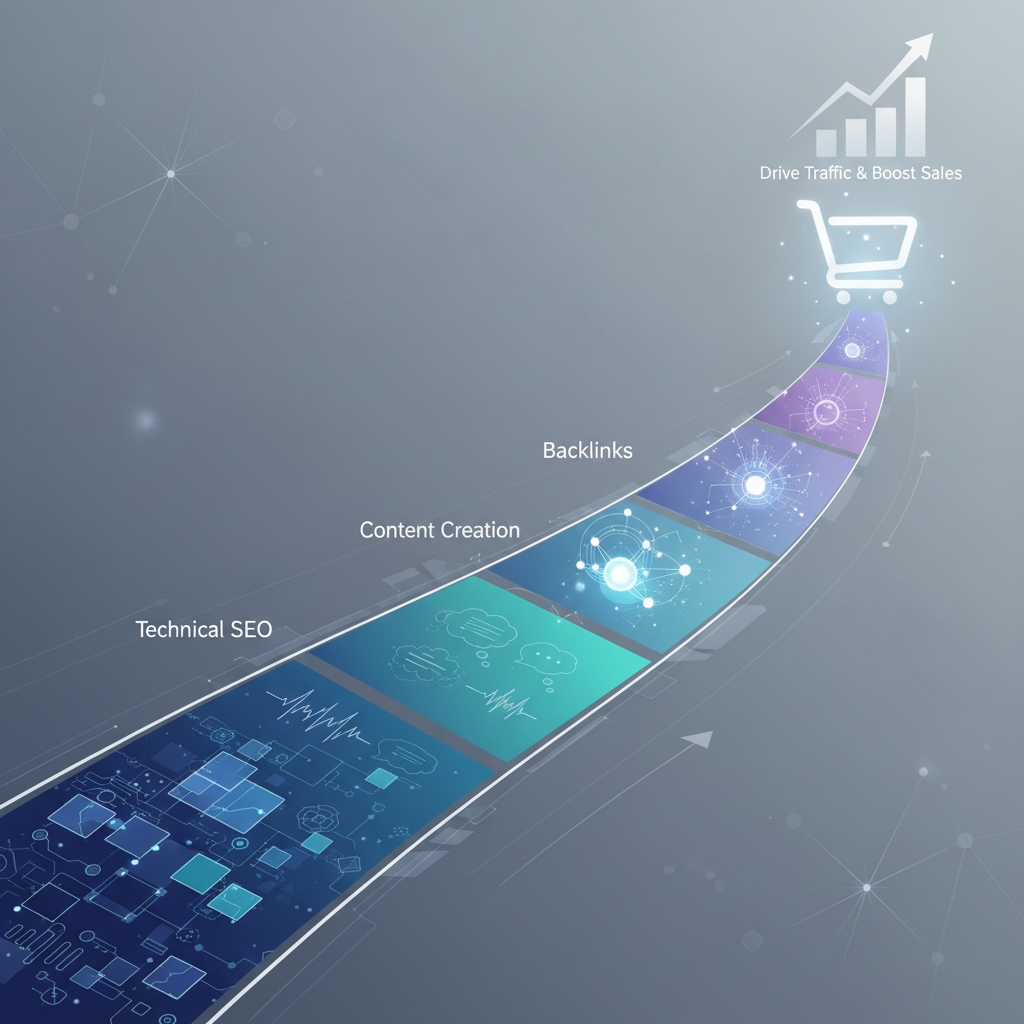
In the fast-paced world of eCommerce, visibility is everything. Without a strong presence in search engine results pages (SERPs), your online store is essentially invisible to potential customers. Think of it this way: your beautifully designed website, your compelling product descriptions, and your seamless checkout process are all rendered useless if no one can find you. This is where a robust SEO strategy becomes your most valuable asset.
But navigating the ever-changing landscape of search engine optimization can feel overwhelming. Algorithms evolve, trends shift, and what worked yesterday might be obsolete today. This roadmap will equip you, the eCommerce manager, with a clear, actionable plan to boost your website's rankings, drive organic traffic, and ultimately, increase your sales. We'll break down the key phases of a successful SEO strategy, providing you with the knowledge and tools to not only survive but thrive in 2026 and beyond.
Did you know that approximately 93% of online experiences begin with a search engine? Statista
Consider this:
- 75% of users never scroll past the first page of search results. Search Engine Journal
- Nearly 70% of all clicks on a search result go to organic listings. BrightEdge
These statistics underscore the critical importance of achieving top rankings. Without a strategic approach to SEO, you're missing out on a massive opportunity to connect with your target audience.
Where You're Starting: Assessing Your Current SEO Standing
Before you can chart a course to SEO success, you need to understand where you currently stand. This initial assessment phase involves a deep dive into your existing website, your current SEO efforts, and your competitors' strategies.
1. Website Audit
Begin with a comprehensive website audit. This process involves evaluating your website's technical health, content quality, and overall user experience. Key areas to examine include:
- Technical SEO: Identify and fix technical issues that can hinder search engine crawling and indexing. This includes:
- Website speed and mobile-friendliness.
- URL structure and site architecture.
- XML sitemaps and robots.txt files.
- HTTPS implementation.
- Duplicate content issues.
- Content Audit: Evaluate your existing content for quality, relevance, and keyword optimization. Identify areas where content needs to be updated, improved, or created. Look at:
- On-page optimization (title tags, meta descriptions, header tags).
- Keyword usage and density.
- Content freshness and accuracy.
- Internal linking structure.
- User Experience (UX): Assess your website's usability, navigation, and overall user experience. A positive UX can improve rankings and conversion rates. Consider:
- Website design and layout.
- Mobile responsiveness.
- Website speed.
- Ease of navigation.
2. Keyword Research
Keyword research is the foundation of any successful SEO strategy. It involves identifying the terms and phrases your target audience uses when searching for products or services like yours. Use keyword research tools like Ahrefs, SEMrush, or Google Keyword Planner to:
- Identify relevant keywords: Find keywords with high search volume and low competition.
- Analyze competitor keywords: Discover the keywords your competitors are targeting.
- Identify long-tail keywords: These longer, more specific phrases can attract highly qualified traffic.
3. Competitor Analysis
Analyze your top competitors' websites to understand their SEO strategies. Identify their strengths and weaknesses, and look for opportunities to outperform them. Key areas to investigate include:
- Backlink profiles: Analyze their backlinks to understand their authority and reach.
- Keyword targeting: Identify the keywords they're targeting and their ranking positions.
- Content strategy: Evaluate their content for quality, relevance, and keyword optimization.
4. Setting Baselines and KPIs
Establish clear baselines and key performance indicators (KPIs) to measure your progress and track your success. Set realistic goals for:
- Organic traffic: The number of visitors coming to your site from organic search.
- Keyword rankings: Your website's position in SERPs for target keywords.
- Conversion rates: The percentage of visitors who complete a desired action (e.g., purchase).
- Bounce rate: The percentage of visitors who leave your site after viewing only one page.
Phase 1: Foundation – Building a Strong Technical Base
Once you've assessed your current SEO standing, it's time to build a strong technical foundation. This phase focuses on optimizing your website's technical aspects to improve crawlability, indexability, and overall performance.
1. Technical SEO Optimization
- Website Speed: Optimize your website's speed for both desktop and mobile devices. Fast-loading websites provide a better user experience and can improve rankings. Use tools like Google PageSpeed Insights to identify areas for improvement. Implement techniques like image optimization, code minification, and caching.
- Mobile-Friendliness: Ensure your website is fully responsive and provides a seamless experience across all devices. Mobile-first indexing is now the standard, so prioritize mobile optimization.
- URL Structure: Create a clear and concise URL structure that's easy for both users and search engines to understand. Use relevant keywords in your URLs and avoid long, complex strings.
- XML Sitemap: Create and submit an XML sitemap to search engines to help them crawl and index your website effectively.
- Robots.txt: Use a robots.txt file to instruct search engine crawlers which pages to crawl and which to ignore.
- HTTPS Implementation: Secure your website with HTTPS to protect user data and improve trust.
- Schema Markup: Implement schema markup to provide search engines with more context about your content. This can improve your chances of appearing in rich snippets.
2. Site Architecture and Navigation
- Clear Site Structure: Organize your website content logically and create a clear site structure that's easy for users to navigate.
- Internal Linking: Use internal links to connect related pages and guide users through your website. This also helps search engines understand the relationships between your pages.
- Breadcrumbs: Implement breadcrumb navigation to help users understand their location on your website.
- User-Friendly Navigation: Ensure your website's navigation menu is clear, concise, and easy to use.
3. Content Optimization for Crawlability and Indexability
- Keyword Optimization: Strategically incorporate your target keywords into your content, including title tags, meta descriptions, header tags, and body text.
- Image Optimization: Optimize your images for search engines by using descriptive file names, alt tags, and compressing images to reduce file size.
- Duplicate Content: Identify and address any duplicate content issues on your website. Use canonical tags to specify the preferred version of a page.
Phase 2: Building – Creating Compelling Content and Earning Backlinks
With a solid technical foundation in place, the next phase focuses on creating high-quality content and building a strong backlink profile. This phase is crucial for attracting organic traffic and establishing your website as an authority.
1. Content Creation
- Content Strategy: Develop a content strategy that aligns with your target audience's needs and interests. Focus on creating valuable, informative, and engaging content.
- Blog Posts: Regularly publish blog posts on relevant topics to attract organic traffic and establish thought leadership.
- Product Pages: Optimize your product pages with compelling descriptions, high-quality images, and clear calls to action.
- Landing Pages: Create dedicated landing pages for specific marketing campaigns or product promotions.
- Video Content: Incorporate video content to engage your audience and improve your website's ranking.
2. On-Page Optimization
- Title Tags: Write compelling title tags that include your target keywords and accurately reflect the content of your pages.
- Meta Descriptions: Craft engaging meta descriptions that entice users to click on your search results.
- Header Tags: Use header tags (H1, H2, H3, etc.) to structure your content and make it easy to read.
- Content Quality: Focus on creating high-quality, informative, and well-written content that provides value to your audience.
- Internal Linking: Strategically link to other relevant pages on your website to improve user experience and help search engines understand your site's structure.
3. Backlink Acquisition
Building a strong backlink profile is essential for improving your website's authority and ranking. Focus on acquiring high-quality backlinks from reputable websites.
- Guest Blogging: Contribute guest blog posts to other websites in your industry.
- Broken Link Building: Find broken links on other websites and offer your content as a replacement.
- Resource Page Link Building: Identify resource pages on other websites and reach out to get your content included.
- Earning Backlinks: Create shareable content that naturally attracts backlinks (e.g., infographics, data-driven reports).
Phase 3: Optimizing – Refining and Measuring Performance
This phase focuses on continually refining your SEO strategy and measuring your performance to ensure you're achieving your goals. It's an ongoing process that requires constant monitoring and adaptation.
1. Performance Tracking and Analysis
- Google Analytics: Use Google Analytics to track your website traffic, user behavior, and conversion rates.
- Google Search Console: Use Google Search Console to monitor your website's performance in search results, identify technical issues, and submit sitemaps.
- Keyword Ranking Tracking: Track your website's ranking positions for your target keywords.
2. A/B Testing and Conversion Rate Optimization (CRO)
- A/B Testing: Conduct A/B tests to optimize your website's design, content, and calls to action. Test different variations of your pages to see which ones perform best.
- Conversion Rate Optimization (CRO): Implement CRO strategies to improve your website's conversion rates. This includes optimizing your website's user experience, calls to action, and checkout process.
3. Content Updates and Revisions
- Content Audits: Regularly audit your content to identify areas for improvement. Update outdated content and add new content to keep your website fresh and relevant.
- Keyword Optimization: Continuously optimize your content for your target keywords. Identify new keywords and update your content to target them.
4. Local SEO (If Applicable)
If you have a local business, optimize your website for local search.
- Google My Business: Claim and optimize your Google My Business profile.
- Local Citations: Get your business listed in local directories.
- Local Keyword Targeting: Target local keywords in your content.
Measuring Success: Key Metrics and KPIs
Measuring the success of your SEO efforts is critical for making data-driven decisions and optimizing your strategy. Focus on tracking the following key metrics and KPIs:
- Organic Traffic: Track the number of visitors coming to your website from organic search. This is a primary indicator of your SEO success.
- Keyword Rankings: Monitor your website's ranking positions for your target keywords. This helps you understand how well you're competing in SERPs.
- Conversion Rates: Measure the percentage of visitors who complete a desired action, such as making a purchase, filling out a form, or signing up for a newsletter. This is a direct measure of your business's success.
- Click-Through Rate (CTR): Track the percentage of users who click on your website's listing in search results. A higher CTR indicates that your title tags and meta descriptions are compelling.
- Bounce Rate: Monitor the percentage of visitors who leave your website after viewing only one page. A high bounce rate can indicate issues with your website's content or user experience.
- Time on Site: Measure the average time visitors spend on your website. Longer time on site suggests that your content is engaging and valuable.
- Pages per Session: Track the average number of pages visitors view per session. More pages per session indicate that users are exploring your website and finding relevant content.
Ultimately, Your Path to eCommerce SEO Success in 2026
Successfully navigating the world of eCommerce SEO in 2026 requires a strategic, data-driven approach. By following this roadmap, you can build a strong technical foundation, create compelling content, earn high-quality backlinks, and continually refine your strategy. Remember, SEO isn't a one-time fix; it's an ongoing process that requires consistent effort and adaptation.
By focusing on these key areas, eCommerce managers can significantly improve their website's visibility, attract more organic traffic, and ultimately drive more sales. Embrace the ever-changing landscape of SEO, stay informed about the latest trends, and continuously optimize your strategy to achieve long-term success. The path to the top of the SERPs may be challenging, but with the right approach and dedication, you can conquer the digital realm and watch your eCommerce business thrive.
Actionable Takeaways:
- Prioritize Mobile-Friendliness: Ensure your website provides an excellent mobile experience, as mobile-first indexing is now standard.
- Focus on Content Quality: Create high-quality, informative, and engaging content that provides value to your audience.
- Build High-Quality Backlinks: Focus on earning backlinks from reputable websites to improve your website's authority.
- Track and Analyze Your Results: Use data to make informed decisions and continuously optimize your SEO strategy.
- Stay Updated on SEO Trends: Keep abreast of the latest SEO trends and algorithm updates to stay ahead of the curve.
By implementing these strategies, eCommerce managers can build a robust SEO strategy that drives organic traffic, increases conversion rates, and fuels sustainable business growth.