
Increased Impressions, Decreased Rankings: The SEO Pros, Cons & Solutions for eCommerce
Increased Impressions, Decreased Rankings: The SEO Pros, Cons & Solutions for eCommerce
Is your website traffic booming, yet your search engine rankings are plummeting? You're not alone. Many eCommerce businesses face this frustrating disconnect: more content views, but a lower position in search results. This paradox is a symptom of underlying SEO issues that, if left unaddressed, can severely impact your bottom line. Sound familiar? This guide provides a comprehensive analysis of this complex issue, exploring the pros and cons, who it impacts, and actionable solutions for eCommerce managers.
What It Is: The Impression vs. Ranking Conundrum
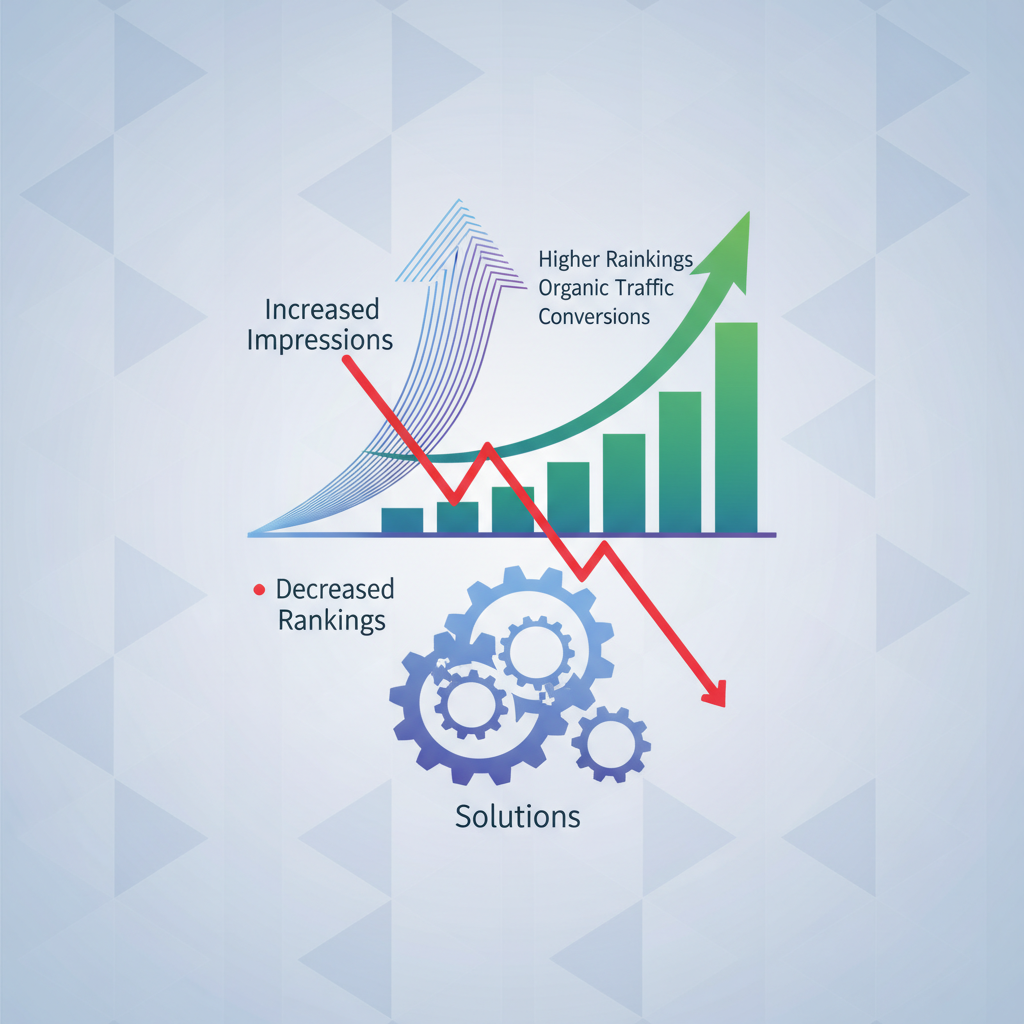
Here's the deal: your website gains more impressions – meaning your pages show up more frequently in search results – but the average position of those pages is decreasing. This means users are seeing your content, but it's appearing further down the search results page, making it less likely they'll click through to your site.
This is a classic SEO challenge that requires careful diagnosis. It can be caused by various factors, from algorithm updates to changes in user search behavior and even technical SEO problems. Understanding the interplay between impressions and rankings is critical for eCommerce businesses striving for organic growth.
The Upsides of Increased Impressions
While a decrease in average position is concerning, increased impressions aren't inherently bad. In fact, they can indicate some positive developments:
- Expanded Keyword Coverage: You might be ranking for a wider range of keywords, meaning your content is more relevant to a broader audience. This can lead to increased visibility, even if the average position is lower.
- Brand Awareness: More impressions mean more people are seeing your brand name and website in search results. This increased visibility can contribute to brand recognition and recall, even if they don't click immediately.
- Potential for Future Growth: Increased impressions suggest that your content is being indexed and recognized by search engines. If you can address the ranking issues, this foundation can lead to significant organic traffic growth.
Tip: Analyze the keywords driving impressions. Are they relevant to your target audience and product offerings? If not, you might be attracting the wrong kind of traffic.
The Downsides of a Falling Average Position
The downsides of a falling average position are significant and can outweigh the benefits of increased impressions. Here's what to watch out for:
- Reduced Click-Through Rate (CTR): Lower rankings mean fewer clicks. The first few positions in search results get the vast majority of clicks. Being on page two is practically invisible.
- Decreased Organic Traffic: Fewer clicks translate directly to less organic traffic, which is crucial for eCommerce businesses.
- Lost Revenue: Reduced traffic inevitably leads to fewer conversions and lost revenue. This is the ultimate cost of poor rankings.
- Damage to Brand Reputation: If your website consistently appears lower in search results, it can damage your brand's perceived authority and trustworthiness.
Warning: A steady decline in average position is a red flag. It's a sign that your SEO strategy needs immediate attention. Ignoring this trend can be detrimental.
Who Is Most Affected?
This issue disproportionately affects certain types of eCommerce businesses and individuals:
- New eCommerce Stores: Businesses that are new to the market or have recently launched a website are more vulnerable, as they haven't yet established strong domain authority and brand recognition.
- Businesses with Aggressive SEO Strategies: Those engaging in tactics that violate search engine guidelines (like keyword stuffing or buying backlinks) are at a higher risk of penalties that can lead to ranking drops.
- Businesses Relying Heavily on Organic Traffic: If organic search is a primary source of traffic and revenue, a decrease in rankings can be devastating.
- eCommerce Managers: Those responsible for SEO and online marketing will feel the direct impact of this issue, and the pressure to find solutions.
Who Should Skip It (and Focus on Other Priorities)?
While most eCommerce businesses need to prioritize SEO, there are scenarios where focusing on average position might not be the top priority:
- Businesses with strong Paid Advertising: If you're heavily invested in paid advertising (like Google Ads or Facebook Ads), the impact of organic ranking fluctuations might be less severe.
- Businesses with a Niche Audience: If you have a very specific, loyal customer base and rely more on direct traffic or social media, organic ranking might be less critical.
- Businesses Focused on Brand Building: If the primary goal is brand awareness and long-term customer relationships, the immediate impact of ranking changes could be less of a concern, although SEO should still be considered.
Solutions to Improve Rankings
If you're experiencing a drop in average position, it's time to take action. Here are some solutions to consider:
1. Technical SEO Audit
Start with a comprehensive technical SEO audit. This involves examining your website's:
- Crawlability: Ensure search engines can easily access and index your site.
- Mobile-Friendliness: Optimize your website for mobile devices.
- Site Speed: Improve page loading times.
- Structured Data: Implement schema markup to help search engines understand your content.
Why It Matters: A technically sound website is the foundation for good rankings. Issues like slow loading speeds or broken links can significantly hurt your search performance.
2. Keyword Research and Optimization
Revisit your keyword strategy.
- Identify High-Value Keywords: Focus on keywords with high search volume and commercial intent.
- Optimize On-Page Elements: Ensure your title tags, meta descriptions, headings, and content are optimized for your target keywords.
- Content is King: Create high-quality, informative, and engaging content that answers user queries. Focus on user intent.
Example: A skincare brand might target keywords like "best anti-aging cream" and create detailed product pages and blog posts addressing this query.
3. Content Strategy & Creation
Regularly produce fresh, high-quality content that aligns with your target audience's interests and search queries. This helps to establish your website as an authority in your niche.
- Blog Posts: Write informative articles about industry trends, product reviews, and how-to guides.
- Product Pages: Optimize your product pages with detailed descriptions, high-quality images, and customer reviews.
- Video Content: Create videos that showcase your products, provide tutorials, or share behind-the-scenes content.
Here's what most guides get wrong: They don't emphasize the importance of consistent content creation. It's not enough to publish a few articles; you need a regular schedule.
4. Link Building
Build high-quality backlinks from reputable websites. This signals to search engines that your website is a valuable resource.
- Guest Blogging: Write guest posts for other websites in your industry.
- Outreach: Reach out to other websites and ask them to link to your content.
- Broken Link Building: Find broken links on other websites and suggest your content as a replacement.
Quote: "Link building is still the most important ranking factor." – Rand Fishkin, Founder of SparkToro. SparkToro
5. Website Structure and User Experience (UX)
A well-structured website that provides a positive user experience is crucial for SEO success.
- Internal Linking: Link to other relevant pages on your website to improve navigation and distribute link equity.
- Website Navigation: Make it easy for users to find what they're looking for.
- Mobile Optimization: Ensure your website is responsive and optimized for mobile devices.
Example: Use breadcrumbs to help users understand their current location on your website.
6. Analyze and Adapt
Continuously monitor your website's performance and adapt your strategy.
- Use SEO Tools: Use tools like Google Search Console, SEMrush, and Ahrefs to track your rankings, traffic, and other key metrics.
- Track User Behavior: Use Google Analytics and other analytics tools to understand how users interact with your website.
- Stay Updated: Keep up with the latest SEO trends and algorithm updates.
Quote: "SEO is not a set-it-and-forget-it strategy. It's an ongoing process of analysis, adaptation, and optimization." – Neil Patel, Digital Marketing Expert. Neil Patel
7. Use Social Media
While social media isn't a direct ranking factor, it can drive traffic and increase brand visibility, which indirectly benefits your SEO.
- Share Your Content: Promote your website content on social media platforms.
- Engage with Your Audience: Interact with your followers and build a strong online community.
- Run Social Media Ads: Use paid advertising to reach a wider audience.
Statistic: According to Statista, as of January 2024, there were 4.95 billion social media users worldwide. Statista
Ultimately: Turning Impressions into Rankings
Increased impressions without corresponding ranking improvements can be a frustrating experience for eCommerce businesses. By understanding the pros and cons of this situation, and implementing the strategies outlined above, you can turn those impressions into clicks, traffic, and ultimately, conversions. Remember, SEO is an ongoing process. Consistent effort and adaptation are key to achieving long-term success. Focus on creating high-quality content, optimizing your website for search engines, and providing a positive user experience. The rewards of improved rankings and increased organic traffic are well worth the effort.
Actionable Takeaways for eCommerce Managers:
- Conduct a Technical SEO Audit: Identify and fix any technical issues that might be hindering your rankings.
- Refine Your Keyword Strategy: Focus on high-value keywords and optimize your content accordingly.
- Create High-Quality Content: Regularly publish informative and engaging content that addresses your target audience's needs.
- Build High-Quality Backlinks: Earn links from reputable websites to improve your domain authority.
- Monitor Your Performance: Use SEO tools to track your rankings, traffic, and conversions.