
8 Ecommerce Mistakes That Are Crushing Your Conversions in 2025 (And How to Fix Them)
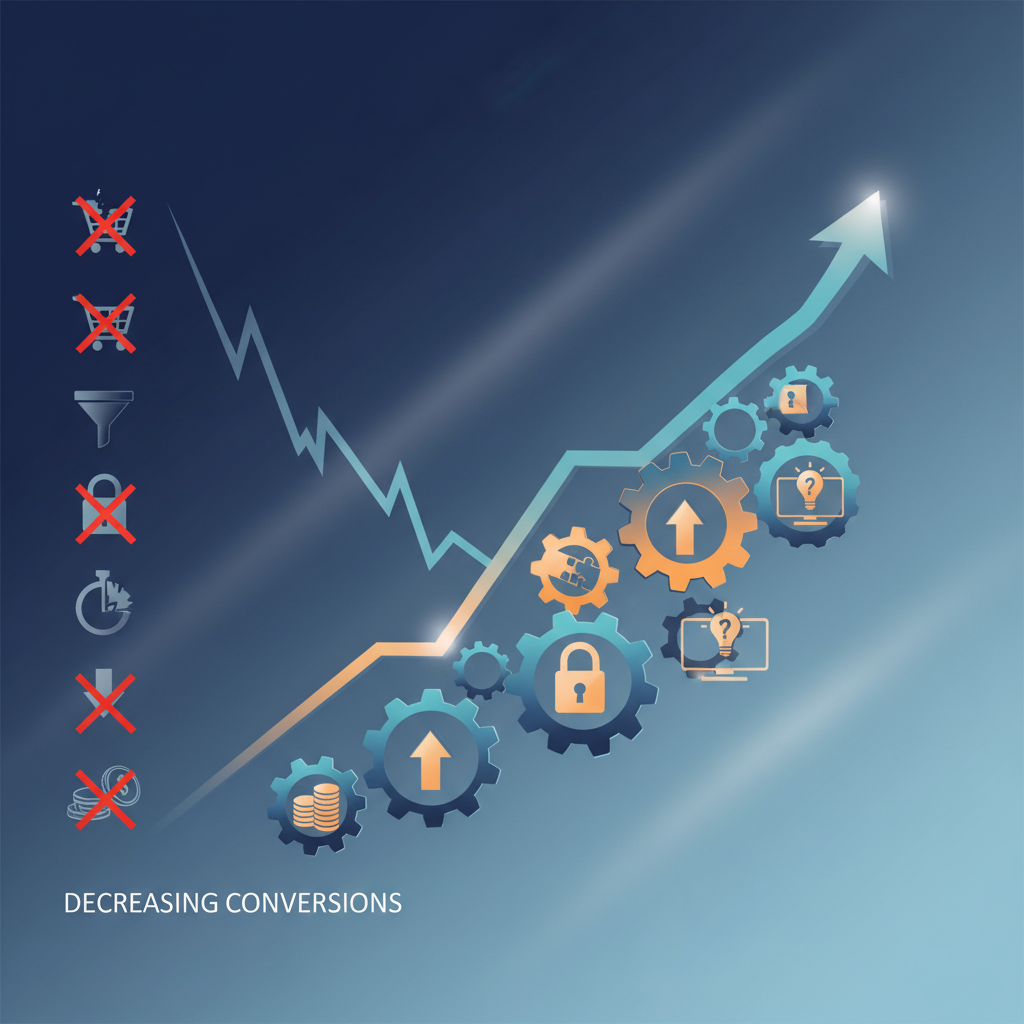
Is Your Online Store Underperforming? 8 Ecommerce Mistakes That Could Be Costing You Conversions
Is your online store struggling? Are you spending a fortune on traffic, only to watch visitors bounce without buying? Sound familiar? You're definitely not alone. Many ecommerce businesses face challenges with conversion rate optimization (CRO), and even small errors can significantly impact your bottom line. The online retail world is always changing, and understanding and correcting these mistakes is more critical than ever. With AI transforming search and consumer behavior, staying ahead means constant vigilance and making proactive adjustments.
The average ecommerce conversion rate typically hovers around 2-3% Baymard Institute. That means for every 100 visitors, only a few actually become paying customers. Plus, a substantial number of potential customers abandon their carts—often exceeding 70% Statista. The cost of these mistakes can be huge, leading to lost revenue and missed growth opportunities. Ultimately, to s쳮d in 2024 and beyond, with AI-driven search results and increased competition, you need a streamlined, user-friendly, and conversion-focused online experience.
To help you pinpoint and fix these issues, I've compiled a list of common ecommerce mistakes, drawing from real-world examples and expert insights. Let's get into the eight most prevalent errors that could be hurting your sales—and, more importantly, how to fix them.
Mistake #1: Ignoring Mobile Optimization
Mobile commerce is the norm. If your website isn't optimized for mobile devices, you're turning away a massive chunk of potential customers. A slow, clunky, or hard-to-navigate mobile site is a conversion killer. Google's mobile-first indexing further emphasizes the need for a mobile-friendly experience.
"Mobile optimization isn't just about making your site look good on a phone; it's about providing a seamless and efficient shopping experience." - Ecommerce Expert
The Fix:
- Responsive Design: Make sure your website uses a responsive design that adapts to different screen sizes. This provides an optimal viewing and interaction experience across all devices.
- Fast Loading Speed: Optimize images, use browser caching, and consider a Content Delivery Network (CDN) to improve loading times. Page speed is crucial, especially for mobile users who often have slower internet connections.
- Simplified Navigation: Make it easy for users to find what they're looking for with clear navigation menus, search functionality, and a streamlined checkout process.
- Mobile-First Indexing: Google uses mobile-first indexing, meaning it primarily uses the mobile version of a website for indexing and ranking. Prioritize mobile optimization to improve search visibility.
- Testing and Iteration: Regularly test your mobile site on various devices and browsers. Gather user feedback to identify pain points and make iterative improvements.
Mistake #2: A Poor Checkout Process
A confusing checkout process is a leading cause of cart abandonment. Every extra step, every unnecessary field, and every moment of frustration increases the chance a customer will leave without buying.
According to a study by the Baymard Institute, approximately 70% of online shopping carts are abandoned Baymard Institute. Streamlining this process can drastically improve conversion rates.
The Fix:
- Guest Checkout: Offer a guest checkout option to eliminate the need for account creation. This removes a barrier for first-time buyers.
- Minimize Form Fields: Only ask for essential information. Fewer fields mean less time and effort for customers.
- Progress Indicators: Use a progress bar to show customers where they are in the checkout process. This helps manage expectations and reduces anxiety.
- Multiple Payment Options: Provide a variety of payment methods, including credit cards, digital wallets (like PayPal, Apple Pay, and Google Pay), and other popular options.
- Mobile Optimization: Ensure the checkout process is fully optimized for mobile devices.
Mistake #3: Lack of Trust Signals
Online shoppers rely on trust signals to assess a website's legitimacy. Without them, potential customers may hesitate to make a purchase, fearing fraud or poor service. Building trust is essential for converting visitors into buyers. This is especially true for new or lesser-known brands.
The Fix:
- Security Badges: Display security badges (e.g., SSL certificates, McAfee Secure) prominently to reassure customers that their information is safe.
- Customer Reviews and Testimonials: Showcase positive reviews and testimonials from satisfied customers. This social proof builds credibility and encourages conversions.
- Money-Back Guarantees and Return Policies: Offer clear and concise money-back guarantees and return policies to reduce risk and build confidence.
- Contact Information: Make your contact information (phone number, email address, physical address) easily accessible. This demonstrates transparency and provides customers with a way to reach you if they have questions or concerns.
- About Us Page: Create an "About Us" page that tells your brand's story, highlights your values, and establishes a personal connection with your audience.
Mistake #4: Poor Product Descriptions and Images
Product descriptions and images are crucial for conveying your products' value and persuading customers to buy. Vague, uninformative descriptions and low-quality images can leave customers unsure and hesitant.
"Customers can't touch or feel the product online, so your descriptions and images have to do the heavy lifting." - Ecommerce UX Designer
The Fix:
- Detailed Descriptions: Write detailed and informative product descriptions that highlight key features, benefits, and specifications.
- High-Quality Images: Use high-resolution images that showcase your products from multiple angles. Consider including lifestyle photos and videos to provide a more immersive experience.
- Benefit-Oriented Language: Focus on the benefits of your products rather than just listing features.
- Customer Reviews: Incorporate customer reviews into your product pages to provide social proof and build trust.
- Size Charts and Guides: Provide size charts and guides to help customers choose the right size and reduce returns.
Mistake #5: Ignoring Website Speed
Slow website speed is a major deterrent for online shoppers. Visitors are impatient and will quickly abandon a slow-loading site, especially on mobile. Page speed directly impacts bounce rates, conversion rates, and overall revenue.
The Fix:
- Optimize Images: Compress images without sacrificing quality. Use appropriate image formats (e.g., WebP) for better performance.
- Leverage Browser Caching: Enable browser caching to store static assets (like images and CSS files) on the user's device, reducing loading times on subsequent visits.
- Minimize HTTP Requests: Reduce the number of HTTP requests by combining CSS and JavaScript files.
- Use a CDN: A Content Delivery Network (CDN) distributes your website's content across multiple servers, ensuring faster loading times for users around the world.
- Choose a Reliable Hosting Provider: Select a hosting provider that offers fast and reliable servers. Consider upgrading your hosting plan if necessary.
Mistake #6: Not Collecting Customer Data
Failing to collect and analyze customer data means missing out on understanding your audience, personalizing their experience, and optimizing your marketing. Data-driven insights are essential for making informed decisions and improving conversion rates.
The Fix:
- Implement Analytics: Install website analytics tools (like Google Analytics) to track key metrics such as traffic sources, bounce rates, conversion rates, and sales data.
- Use Heatmaps and Session Recordings: Utilize heatmaps and session recordings to understand how users interact with your website, identify pain points, and optimize the user experience.
- Gather Customer Feedback: Collect customer feedback through surveys, feedback forms, and customer reviews to gain insights into their needs and preferences.
- Segment Your Audience: Segment your audience based on demographics, behavior, and purchase history to personalize marketing messages and product recommendations.
- A/B Testing: Continuously A/B test different elements of your website (e.g., headlines, calls to action, product descriptions) to identify what resonates best with your audience.
Mistake #7: Lack of a Clear Call to Action (CTA)
A clear and compelling call to action guides visitors toward the desired action. Without a clear CTA, visitors may get confused and leave without converting.
The Fix:
- Strategic Placement: Place CTAs prominently on your website, such as above the fold, on product pages, and in the checkout process.
- Action-Oriented Language: Use action-oriented language (e.g., "Shop Now," "Add to Cart," "Get Started") to encourage visitors to take action.
- Visual Design: Use contrasting colors and visual cues (e.g., arrows) to make CTAs stand out.
- Personalization: Personalize CTAs based on user behavior and preferences.
- A/B Testing: A/B test different CTA variations to identify which ones perform best.
Mistake #8: Neglecting Post-Purchase Experience
The customer journey doesn't end after the purchase. A positive post-purchase experience can lead to repeat business, customer loyalty, and positive word-of-mouth marketing. Conversely, a negative post-purchase experience can result in lost customers and damage your brand reputation.
The Fix:
- Order Confirmation and Tracking: Send order confirmation emails with clear order details and provide tracking information so customers can monitor the status of their shipment.
- Proactive Communication: Keep customers informed about any delays or issues with their order.
- Easy Returns and Exchanges: Offer a hassle-free returns and exchanges process.
- Excellent Customer Service: Provide responsive and helpful customer service to address any questions or concerns.
- Personalized Follow-up: Send personalized follow-up emails, such as thank-you notes, product recommendations, and special offers.
Prevention Checklist
To ensure your ecommerce store is optimized for conversions, follow this checklist:
- Mobile Optimization: Ensure responsive design, fast loading speeds, and streamlined navigation.
- Checkout Process: Offer guest checkout, minimize form fields, and provide multiple payment options.
- Trust Signals: Display security badges, customer reviews, and clear return policies.
- Product Descriptions: Write detailed descriptions, use high-quality images, and focus on benefits.
- Website Speed: Optimize images, leverage browser caching, and use a CDN.
- Customer Data: Implement analytics, use heatmaps, and collect customer feedback.
- Calls to Action: Use clear, action-oriented CTAs and strategic placement.
- Post-Purchase Experience: Provide order confirmation, tracking, and excellent customer service.
Ultimately, optimizing your ecommerce store for conversions is essential for success. By avoiding these eight common mistakes, you can create a seamless, user-friendly, and trustworthy shopping experience that drives sales and fosters customer loyalty. Remember that continuous monitoring, analysis, and optimization are key to staying ahead. Implement this checklist to give your ecommerce store a competitive edge. To take your CRO efforts to the next level, consider using tools like the CRO Benchmark, which provides an AI-driven conversion optimization audit to identify your biggest conversion leaks and deliver prioritized fixes.