
CRO Benchmark vs. Competitor Analysis: Which Conversion Optimization Approach Is Right for Your eCommerce Brand?
CRO Benchmark vs. Competitor Analysis: Which Conversion Optimization Approach Is Right for Your eCommerce Brand?
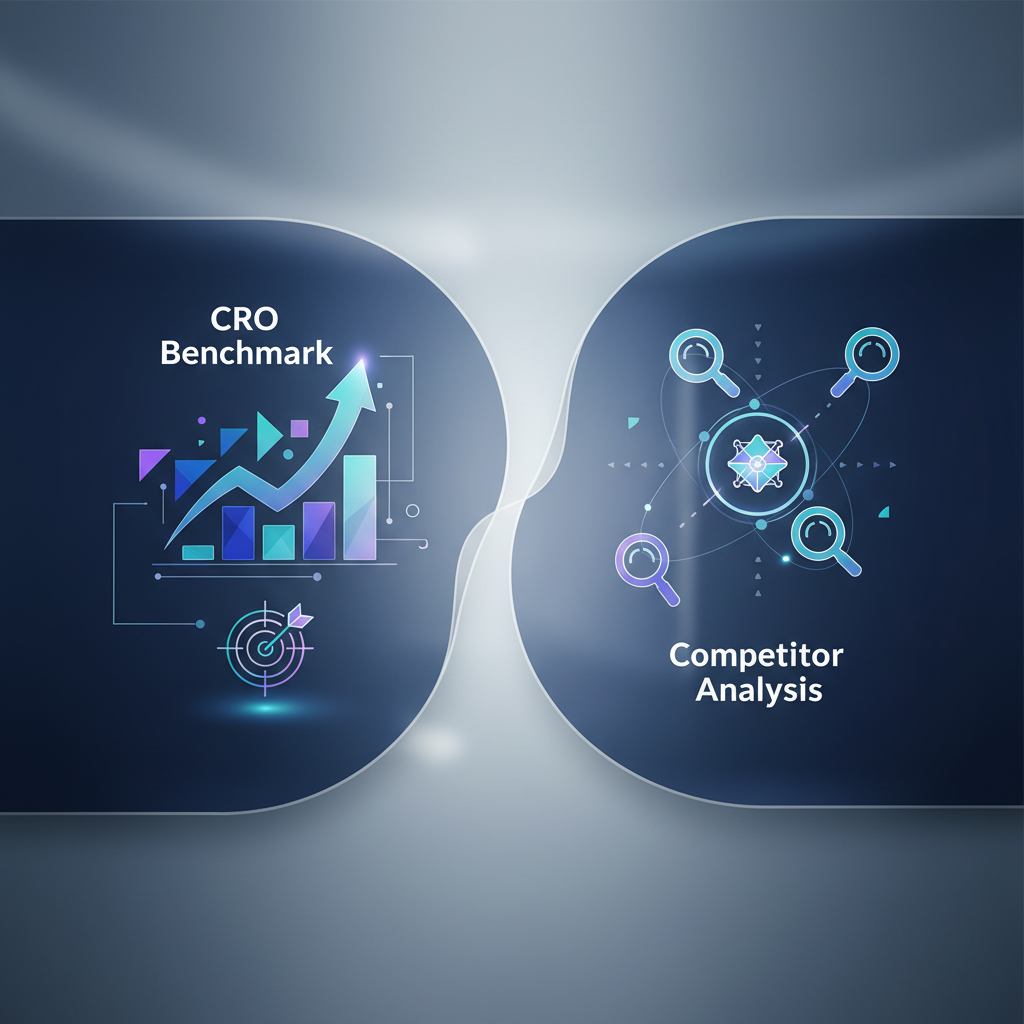
Are you struggling to convert website visitors into paying customers? In the competitive world of eCommerce, it's crucial to stay ahead. Conversion Rate Optimization (CRO) is a vital strategy for maximizing your website's performance and turning visitors into customers. Two common approaches to CRO are using a dedicated CRO Benchmark tool, such as CRO Benchmark, and conducting a Competitor Analysis. But which is the best fit for your eCommerce brand? This in-depth comparison will explore the strengths and weaknesses of each, helping you decide which method aligns with your specific needs and goals.
Note: This article will subtly mention the tool, CRO Benchmark, as an example of a CRO Benchmark approach. The primary focus is on providing educational value and comparing the two CRO strategies.
Why Conversion Optimization Matters
Let's be honest—the average website conversion rate is only around 2-3%. That means a massive chunk of your website traffic isn't converting into sales or leads. Improving this rate can significantly boost revenue and profitability. Conversion optimization directly addresses this challenge by identifying and fixing issues that prevent users from taking desired actions. This includes everything from improving website design and user experience to optimizing checkout processes and crafting compelling calls to action. Sound familiar?
Here's why CRO is so important. Consider these numbers:
- Approximately 70% of online shopping carts are abandoned Baymard Institute.
- Businesses see an average increase of 25% in conversion rates by optimizing their landing pages HubSpot.
- Companies that invest in CRO see an average ROI of 223% Invesp.
These statistics underscore the substantial impact that CRO can have on your bottom line. By investing in CRO strategies, you can significantly improve your website's performance and achieve your business goals.
Quick Comparison Table
| Feature | CRO Benchmark | Competitor Analysis |
|---|---|---|
| Focus | Holistic website performance, identifying leaks | Competitor strategies, market trends |
| Data Source | Internal website data, benchmarks | Publicly available information, competitor websites |
| Analysis Depth | Deep dive into various CRO aspects | High-level overview of competitor tactics |
| Actionable | Prioritized fixes, A/B testing ideas | Strategic insights, areas for improvement |
Overview of Each Approach
CRO Benchmark
A CRO Benchmark is a comprehensive website audit that assesses your website's performance across various criteria. It uses a combination of data analysis, industry benchmarks, and best practices to identify areas for improvement. This approach gives you a clear understanding of your strengths and weaknesses and provides actionable recommendations to boost your conversion rates.
CRO Benchmark tools often use AI and machine learning to analyze your website, providing you with a clear CRO Index Score and a prioritized list of fixes.
Key Benefits of CRO Benchmarking:
- Comprehensive Analysis: Evaluates numerous factors, including design, usability, and technical performance.
- Objective Insights: Provides unbiased assessments based on data and industry standards.
- Prioritized Recommendations: Highlights the most impactful areas for optimization.
- A/B Testing Ideas: Suggests specific tests to improve conversion rates.
- Benchmarking: Allows you to compare your performance against industry standards.
Competitor Analysis
Competitor analysis involves studying your competitors' websites, marketing strategies, and customer experiences. This approach helps you understand what's working in your industry and identify opportunities to differentiate your brand. It gives you a broader understanding of the market landscape and helps you make informed decisions about your own CRO efforts.
Key Benefits of Competitor Analysis:
- Market Insight: Understand industry trends and competitor strategies.
- Differentiation: Identify opportunities to stand out from the competition.
- Best Practices: Learn from successful competitor tactics.
- Competitive Advantage: Develop strategies to outperform your rivals.
- Benchmarking: Compare your performance against key competitors.
Feature-by-Feature Comparison
Let's delve deeper into how CRO Benchmarks and Competitor Analysis stack up feature-by-feature:
Data Gathering
- CRO Benchmark: Uses your website's internal data, such as analytics, user behavior, and performance metrics. It compares this data against industry benchmarks and best practices to identify areas for improvement. Some tools, like CRO Benchmark, also incorporate AI-driven analysis to provide deeper insights.
- Competitor Analysis: Relies on publicly available information, including competitor websites, social media channels, and marketing materials. You might also use tools like SEMrush or Ahrefs to analyze competitor strategies.
Scope and Depth of Analysis
- CRO Benchmark: Offers a comprehensive and in-depth analysis of your website's performance across various areas, including website speed, mobile responsiveness, accessibility, and customer sentiment. It provides a detailed understanding of your website's strengths and weaknesses.
- Competitor Analysis: Provides a broader overview of competitor strategies, market trends, and customer experiences. It focuses on high-level analysis and identifying areas where you can improve.
Actionable Insights
- CRO Benchmark: Provides prioritized recommendations for improving your website's performance, including specific A/B testing ideas. It helps you focus on the most impactful areas for optimization, leading to significant improvements in conversion rates.
- Competitor Analysis: Provides strategic insights and helps you identify areas for improvement. It helps you develop a better understanding of the market and develop strategies to outperform your rivals.
Implementation and Execution
- CRO Benchmark: Can be implemented quickly, offering immediate insights and actionable recommendations. AI-powered tools like CRO Benchmark can generate prioritized fixes and A/B testing ideas within minutes.
- Competitor Analysis: Requires more time and effort, as you have to gather data and analyze your competitors' strategies. It's an ongoing process that requires constant monitoring and adjustments.
Time Investment
- CRO Benchmark: Offers quick results. Automated tools can provide an analysis and recommendations in a matter of minutes.
- Competitor Analysis: Can be time-consuming, requiring significant research and analysis.
Pricing
- CRO Benchmark: Pricing varies depending on the tool and the features offered. Some tools offer free trials or basic plans, while others have premium subscriptions with advanced features and analytics. CRO Benchmark offers various subscription levels to meet the needs of different users.
- Competitor Analysis: The cost of competitor analysis depends on the tools used, the scope of the analysis, and whether you outsource the work. Free tools can provide basic insights, while premium tools offer more in-depth analysis. Outsourcing competitor analysis can be costly but may provide valuable results.
Best For
- CRO Benchmark: Best for eCommerce brands, CRO specialists, and digital marketers seeking a comprehensive website audit and actionable recommendations. It's ideal for those looking to quickly identify conversion leaks and prioritize optimization efforts.
- Competitor Analysis: Best for businesses that want to gain a deeper understanding of their market and identify opportunities to differentiate their brand. It's a valuable tool for developing competitive strategies and staying ahead of the curve.
Our Verdict
Both CRO Benchmarking and Competitor Analysis are valuable tools for improving your website's performance and achieving your business goals. The best approach for you depends on your specific needs and goals. If you're looking for a comprehensive website audit with actionable recommendations, a CRO Benchmark is the way to go. It offers quick insights and a clear path to improving your conversion rates. On the other hand, if you want to understand your market and develop competitive strategies, competitor analysis is a valuable tool.
Pro Tip: For the most effective CRO strategy, consider combining both approaches. Use a CRO Benchmark to identify your website's weaknesses and then use competitor analysis to understand how your competitors are addressing those weaknesses. This combined approach can provide a holistic view of your website's performance and market position.
Actionable Takeaways
Here are some actionable takeaways to help you make the most of CRO Benchmarking and Competitor Analysis:
- Conduct a CRO Benchmark: Use a tool like CRO Benchmark to get a comprehensive audit of your website's performance. Identify your biggest conversion leaks and prioritize your optimization efforts.
- Analyze Your Competitors: Regularly analyze your competitors' websites and marketing strategies. Identify areas where you can differentiate your brand and gain a competitive advantage.
- Combine Both Approaches: Integrate CRO Benchmarking and Competitor Analysis into your CRO strategy. Use a benchmark to identify your weaknesses, and then use competitor analysis to understand how your competitors are addressing those weaknesses.
- Prioritize User Experience: Ensure your website provides a seamless and user-friendly experience. Optimize your website's design, navigation, and content to improve user engagement and conversion rates.
- Test and Iterate: Implement A/B testing to continuously improve your website's performance. Test different variations of your website's elements, such as headlines, calls to action, and landing pages, to see what resonates most with your audience.
By implementing these strategies, you can significantly improve your website's performance and achieve your business goals. Remember, conversion optimization is an ongoing process that requires continuous monitoring, testing, and iteration. Stay focused on providing a positive user experience, and your conversion rates will follow.