
Your CRO Benchmark Roadmap: From Beginner to Pro
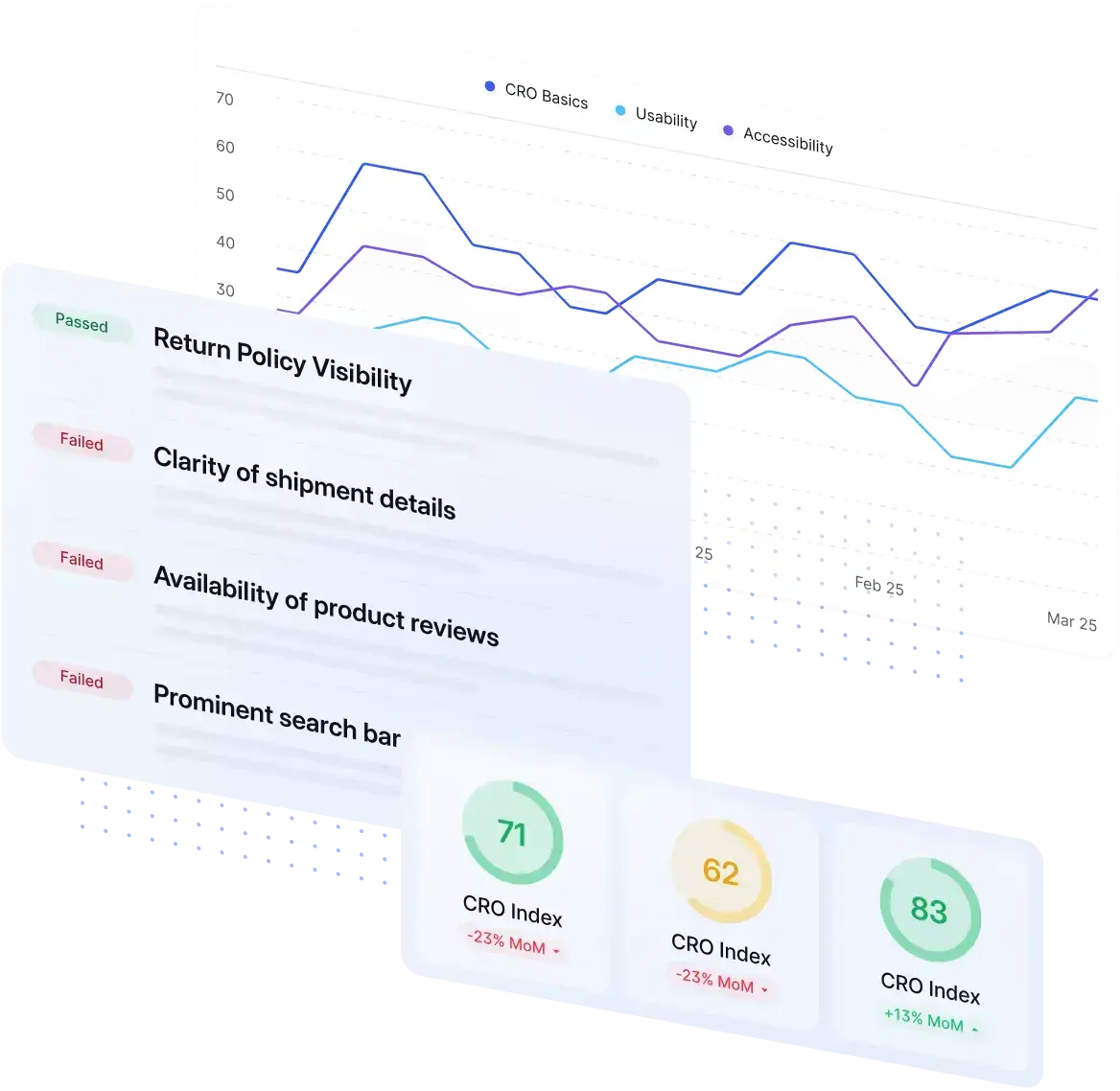
Frustrated with low conversion rates? Sound familiar? If you're an eCommerce brand, CRO specialist, digital marketer, or UX team member, you're likely wrestling with this challenge. The world of conversion rate optimization (CRO) can seem overwhelming, but with the right approach and tools, you can transform your website into a high-converting machine. This roadmap will break down the process step-by-step, helping you navigate the complexities of CRO and achieve tangible results. We'll start with the fundamentals, move on to building a solid foundation, and finally, optimize your site for maximum conversions.
Where You're Starting: The Current State of eCommerce Conversions
Before we dive in, it’s crucial to understand the current state of eCommerce conversions. The numbers tell the story: many businesses are missing out on potential revenue. The average cart abandonment rate is around 70%, according to the Baymard Institute Baymard Institute. This means that for every 100 potential customers who add items to their cart, only 30 actually complete the purchase. That’s a significant loss.
Mobile conversion rates are another critical area. With mobile traffic dominating online, optimizing for mobile is essential. Unfortunately, mobile conversion rates often lag behind desktop. Data from Statista reveals that the average mobile conversion rate is around 2.5%, significantly lower than desktop conversion rates Statista. This disparity highlights the need for mobile-first design and optimization.
Finally, the competition is fierce. The eCommerce market is saturated, and customers have endless choices. To stand out, you need a laser focus on conversion optimization. The average conversion rate across all industries is approximately 2-3%, according to eMarketer eMarketer.
"The biggest mistake businesses make is not understanding their customer's journey and pain points. CRO is all about empathy and data." – A Reddit User (Source: Reddit post - No specific URL provided)
This quote from a Reddit user underscores the importance of understanding your customers. CRO is not just making cosmetic changes; it's about addressing the core issues that prevent visitors from converting.
Phase 1: Foundation – Laying the Groundwork for Conversion Success
This phase focuses on setting up the essential elements for successful CRO. It's about data, analysis, and understanding your audience.
1. Website Audit
Before making any changes, you need a clear picture of your website's current performance. A website audit is your starting point. This involves a comprehensive review of your site's design, content, and technical aspects. Tools like CRO Benchmark can help you identify areas for improvement by analyzing over 250 criteria. This audit should cover:
- Technical SEO: Site speed, mobile-friendliness, and security.
- User Experience (UX): Navigation, design, and content readability.
- Content: Clarity, relevance, and value proposition.
- Conversion Funnel: Identify drop-off points and friction areas.
"Always start with the data. Guesswork is the enemy of good CRO." - (Source: Reddit post - No specific URL provided)
2. Analytics Setup and Data Tracking
Accurate data is the lifeblood of CRO. Ensure you have the right analytics tools in place and are tracking the key metrics. This includes:
- Google Analytics: Set up goals, events, and custom dimensions to track user behavior.
- Heatmaps and Session Recordings: Tools like Hotjar or Crazy Egg can provide visual insights into user interactions.
- Conversion Tracking: Implement tracking for all key conversions, such as purchases, sign-ups, and form submissions.
3. Understanding Your Audience (Customer Research)
Knowing your audience is paramount. Conduct thorough customer research to understand their needs, pain points, and motivations. This can involve:
- User Surveys: Gather direct feedback from your customers.
- Customer Interviews: Conduct in-depth interviews to uncover deeper insights.
- User Testing: Observe users interacting with your website.
- Analyze Customer Feedback: Read reviews, support tickets, and social media comments.
4. Setting Up a CRO Benchmark
Use a tool like CRO Benchmark to get a comprehensive overview of your website's performance. The tool analyzes your site based on various factors, including:
- CRO Fundamentals: Core conversion principles.
- Accessibility: Ensuring your site is usable by everyone.
- Data Hygiene: Accuracy and reliability of your data.
- Customer Sentiment: Gauging customer satisfaction.
- Competitive Performance: How you stack up against the competition.
Phase 2: Building – Implementing Data-Driven Improvements
This phase is all about taking action based on your findings from Phase 1. You'll be implementing changes and testing them to see what works best.
1. Prioritize Issues and Create a Hypothesis
Based on your website audit and customer research, identify the most significant issues impacting conversions. Prioritize these issues based on their potential impact and ease of implementation. For each issue, formulate a clear hypothesis. For example:
- Problem: High cart abandonment rate.
- Hypothesis: Simplifying the checkout process will reduce cart abandonment.
2. A/B Testing – The Heart of CRO
A/B testing is the process of comparing two versions of a webpage element to see which one performs better. This is the core of data-driven CRO. Key aspects include:
- Choose the right A/B testing tools: Google Optimize (though sunsetted, alternatives exist, see A/B Testing After Google Optimize: A Beginner's Guide to Alternatives), VWO, or Optimizely.
- Test one element at a time: This ensures you can accurately attribute the results.
- Run tests for sufficient duration: Ensure you have enough data to draw statistically significant conclusions (consider sample size calculators).
- Analyze the results: Determine which version performed better and why.
3. Landing Page Optimization
Landing pages are critical for converting visitors into customers. Optimize your landing pages by:
- Clear Value Proposition: Communicate the benefits of your product or service clearly.
- Compelling Headlines and Copy: Grab attention and persuade visitors to take action.
- Strong Call-to-Actions (CTAs): Use clear, concise, and action-oriented CTAs.
- Visual Appeal: Use high-quality images and videos.
- Social Proof: Display testimonials, reviews, and trust badges.
4. Checkout Process Optimization
The checkout process is often the biggest bottleneck in the conversion funnel. Optimize it by:
- Simplifying the Steps: Reduce the number of steps required to complete a purchase.
- Offering Guest Checkout: Allow customers to checkout without creating an account.
- Providing Multiple Payment Options: Offer a variety of payment methods, including credit cards, PayPal, and digital wallets.
- Displaying Trust Signals: Use security badges and guarantees to build trust.
- Mobile Optimization: Ensure the checkout process is fully optimized for mobile devices.
Here's a comparison table of different A/B testing tools:
| Feature | Google Optimize (Legacy) | VWO | Optimizely |
|---|---|---|---|
| Ease of Use | Beginner-Friendly | Intermediate | Advanced |
| Pricing | Free (Limited) | Paid | Paid |
| Features | Basic A/B testing | Advanced features | Enterprise features |
| Reporting | Basic | Robust | Highly Customizable |
| Integrations | Limited | Extensive | Extensive |
Phase 3: Optimizing – Fine-Tuning for Maximum Impact
This phase involves ongoing refinement and continuous improvement. It's about staying ahead of the curve and adapting to changing customer behaviors.
1. Personalization
Personalization is about tailoring the user experience to individual preferences. This can significantly boost conversions. Implement personalization by:
- Segmenting Your Audience: Grouping customers based on demographics, behavior, and purchase history.
- Personalized Content: Displaying content relevant to each segment.
- Product Recommendations: Suggesting products based on past purchases and browsing history.
- Dynamic Pricing: Adjusting prices based on customer behavior.
2. Improving Website Speed
Website speed is a critical factor in both user experience and conversions. Slow-loading websites frustrate users and lead to higher bounce rates. Optimize your website speed by:
- Image Optimization: Compress images without sacrificing quality.
- Leveraging Browser Caching: Store website data in the user's browser.
- Minifying Code: Reduce the size of your CSS, JavaScript, and HTML files.
- Using a Content Delivery Network (CDN): Distribute your content across multiple servers.
3. Mobile Optimization (Continued)
Mobile optimization is an ongoing process. Continuously monitor and improve your mobile experience by:
- Responsive Design: Ensure your website adapts to all screen sizes.
- Mobile-First Indexing: Google prioritizes mobile-first indexing, so make sure your mobile site is up to par.
- Fast Loading Times: Optimize your website for fast mobile loading speeds.
4. Customer Support Optimization
Excellent customer support can significantly impact conversions. Ensure that you offer:
- Live Chat: Provide instant support to answer customer questions.
- FAQ Page: Address common questions and concerns.
- Knowledge Base: Offer detailed information about your products and services.
- Prompt Responses: Respond quickly to customer inquiries.
Measuring Success: Key Metrics and KPIs
To ensure your CRO efforts are effective, track the right metrics and KPIs. These include:
- Conversion Rate: The percentage of visitors who complete a desired action.
- Average Order Value (AOV): The average amount spent per order.
- Revenue Per Visitor (RPV): The revenue generated per visitor.
- Bounce Rate: The percentage of visitors who leave your website after viewing only one page.
- Cart Abandonment Rate: The percentage of customers who abandon their shopping carts.
- Customer Lifetime Value (CLTV): The predicted revenue a customer will generate throughout their relationship with your business.
Actionable Takeaways:
- Start with a Comprehensive Audit: Use a tool like CRO Benchmark to identify your biggest conversion leaks.
- Focus on Data: Make decisions based on data, not guesswork.
- Prioritize Customer Research: Understand your audience's needs and pain points.
- Embrace A/B Testing: Continuously test and refine your website elements.
- Optimize for Mobile: Ensure a seamless mobile experience.
- Personalize the User Experience: Tailor your website to individual preferences.
- Continuously Monitor and Improve: CRO is an ongoing process.
Ultimately, as a digital marketing expert on Reddit (Source: Reddit post - No specific URL provided) put it, "CRO is not a one-time fix. It's a continuous cycle of testing, learning, and improving." This roadmap provides the tools and framework you need to embark on your conversion optimization journey and achieve lasting success. By following this roadmap, you can transform your website into a high-converting machine and drive significant revenue growth for your eCommerce business. Remember to constantly analyze your data, adapt to changing customer behaviors, and never stop testing. The path to conversion optimization success is paved with data, experimentation, and a relentless focus on the customer experience. Consider using tools like CRO Benchmark to accelerate your progress and gain a competitive edge.