
What Is a CRO Benchmark? Understanding Your eCommerce Conversion Performance
What Is a CRO Benchmark? Understanding Your eCommerce Conversion Performance
Sound familiar? In the fast-paced world of eCommerce, staying ahead means constantly adapting and improving. One of the most critical aspects? Conversion Rate Optimization (CRO). But how do you know if your CRO efforts are actually paying off? That's where a CRO Benchmark comes in. It gives you a way to measure your performance against industry standards and competitors, helping you pinpoint areas for improvement and track your progress.
What's a CRO Benchmark?
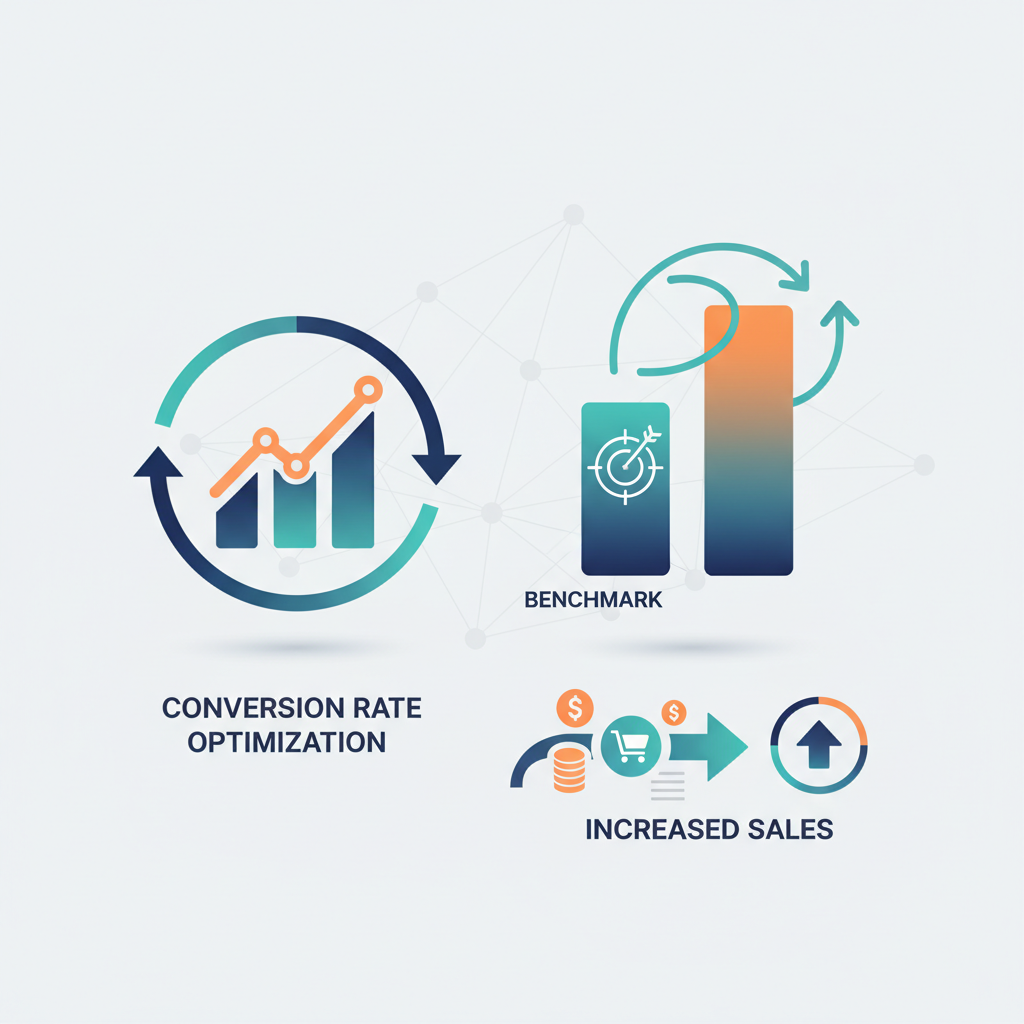
A CRO Benchmark is a point of reference used to evaluate your conversion rate optimization efforts. It's a baseline for understanding how your website or app performs in key areas like conversion rates, user experience, and overall revenue. By comparing your performance to these benchmarks, you can see where you excel and where you need to improve.
Why It Matters
Knowing your CRO performance relative to others is vital for several reasons:
- Identify Conversion Leaks: Benchmarks highlight weaknesses in your conversion funnel, showing where users are dropping off.
- Prioritize Optimization Efforts: By comparing your data to benchmarks, you can focus on the areas that will yield the biggest returns.
- Track Progress Over Time: Benchmarks let you monitor the impact of your CRO efforts and ensure you're moving in the right direction.
- Justify Investments: Demonstrating improvements against benchmarks helps you justify the resources you're putting into CRO.
- Competitive Advantage: Understanding how you stack up against competitors helps you identify areas to gain an edge.
"I keep seeing SaaS stacks getting out of hand, multiple overlapping tools, rising subscription costs, and teams unsure which apps they actually need." - Reddit User, r/SaaS Reddit Post
Real-World Examples
Let's consider some practical examples:
- eCommerce Store Conversion Rate: Imagine an online clothing store. They might benchmark their conversion rate against the industry average for similar businesses. If their rate is lower, they can investigate potential issues like poor product descriptions, a confusing checkout process, or slow website loading times.
- Landing Page Performance: A SaaS company could benchmark the conversion rate of its landing pages against industry standards. If the conversion rate is lower than the benchmark, they might need to improve their value proposition, refine their call-to-action, or optimize the design.
- Mobile Conversion Rate: With mobile traffic becoming increasingly important, many businesses benchmark their mobile conversion rates. If a company's mobile conversion rate lags behind the industry average, it might need to optimize its website for mobile devices, simplify its checkout process, and improve its mobile user experience.
How It Works
Creating and using a CRO benchmark involves several key steps:
- Define Your Metrics: Determine which key performance indicators (KPIs) matter most for your business. Common KPIs include conversion rate, average order value, bounce rate, and customer acquisition cost.
- Gather Data: Collect data on your chosen KPIs from your website analytics, CRM, or other sources.
- Research Industry Benchmarks: Identify industry benchmarks for your chosen KPIs. You can often find this information through industry reports, surveys, or competitor analysis.
- Compare and Analyze: Compare your data to the industry benchmarks. Identify areas where you are performing well and areas where you are lagging.
- Develop an Optimization Plan: Based on your analysis, develop a plan to improve your performance. This plan might include A/B testing, website redesigns, or changes to your marketing strategy.
- Track and Measure: Continuously track and measure your performance against your benchmarks. This helps you monitor your progress and make adjustments to your optimization plan as needed.
Common Use Cases
CRO benchmarks are valuable across various eCommerce and digital marketing scenarios:
- eCommerce: Benchmarking conversion rates, average order values, and customer lifetime value against industry standards to identify areas for improvement in the sales process.
- Lead Generation: Measuring landing page conversion rates, lead-to-customer conversion rates, and cost-per-lead against benchmarks to optimize lead generation efforts.
- SaaS: Comparing website conversion rates, free-to-paid conversion rates, and customer churn rates against industry benchmarks to improve the customer journey.
- Content Marketing: Benchmarking website traffic, content engagement metrics, and conversion rates against industry standards to optimize content strategy and improve lead generation.
- Paid Advertising: Comparing click-through rates (CTR), conversion rates, and cost-per-acquisition (CPA) against benchmarks to optimize paid advertising campaigns.
Mistakes to Avoid
Here's what most guides get wrong:
- Using Irrelevant Benchmarks: Make sure you're comparing your performance to benchmarks that are relevant to your industry, business model, and target audience.
- Ignoring Data Quality: Ensure the data you're using is accurate and reliable. Inaccurate data can lead to flawed conclusions and poor decisions.
- Failing to Adapt: Industry benchmarks are constantly evolving. Make sure you regularly update your benchmarks to reflect the latest trends and best practices.
- Focusing Solely on Benchmarks: Benchmarks are a valuable tool, but they shouldn't be the only factor driving your CRO efforts. Consider your unique business goals and customer base.
- Not Setting Realistic Goals: Set achievable goals based on your benchmarks and resources. Unrealistic goals can be demotivating and lead to frustration.
"ChatGPT cites Reddit 176% more than finance experts. Here's why that matters for content marketing." - Reddit Post, r/ContentMarketing Reddit Post
Statistics and Examples
Let's be honest—CRO and benchmarking are critical. Here's why:
- Approximately 70% of online shopping carts are abandoned Baymard Institute. Addressing this issue through CRO can significantly boost revenue.
- Businesses that use conversion rate optimization see an average increase of 25% in revenue HubSpot. This demonstrates the tangible impact of effective CRO strategies.
- Companies with a well-defined CRO strategy see a 5-10% increase in conversions ConversionXL. A clear, benchmark-driven strategy is critical for success.
Comparison Table: CRO Benchmark Tools
| Feature | CRO Benchmark Tool A | CRO Benchmark Tool B | CRO Benchmark Tool C |
|---|---|---|---|
| Data Sources | Website Analytics | Industry Reports | Competitor Analysis |
| Reporting | Customizable | Pre-built Templates | Competitive Insights |
| Key Metrics | Conversion Rate | Average Order Value | Bounce Rate |
FAQs
- What is a good conversion rate? A good conversion rate varies depending on the industry, product, and target audience. However, a rate of 2-5% is generally considered good for e-commerce. Benchmarking helps you determine what is good for you.
- How often should I update my CRO benchmarks? It's recommended to update your benchmarks at least quarterly, or more frequently if your industry is fast-paced. This ensures you're comparing against the most current data.
- Where can I find industry benchmarks? Industry benchmarks can be found through industry reports, surveys, competitor analysis, and reputable sources like e-commerce platforms and marketing agencies.
Actionable Takeaways
- Start with a baseline: Establish your current performance metrics before you begin optimizing. This is crucial for evaluating the effectiveness of any changes.
- Research industry standards: Identify relevant benchmarks that align with your industry and business model. Don't compare yourself to companies that are not similar to yours.
- Analyze the data: Dive deep into your data and understand why your performance is what it is. Look for patterns and areas for improvement. This might include issues with site speed or other problems.
- Prioritize and test: Focus on the areas that have the greatest potential impact on your conversion rates. Run A/B tests to validate your assumptions and make data-driven decisions.
- Continuously monitor: Keep an eye on your key metrics and benchmarks to track your progress and make adjustments to your strategy as needed. The best CRO is a continuous process.
Ultimately, by understanding and utilizing CRO benchmarks, eCommerce businesses can gain valuable insights into their performance, identify areas for improvement, and drive more conversions. This strategic approach is essential for staying competitive and achieving sustainable growth in the ever-evolving digital landscape.