
Low Conversion Rates: How CRO Benchmark Can Identify & Fix Your Ecommerce Leaks
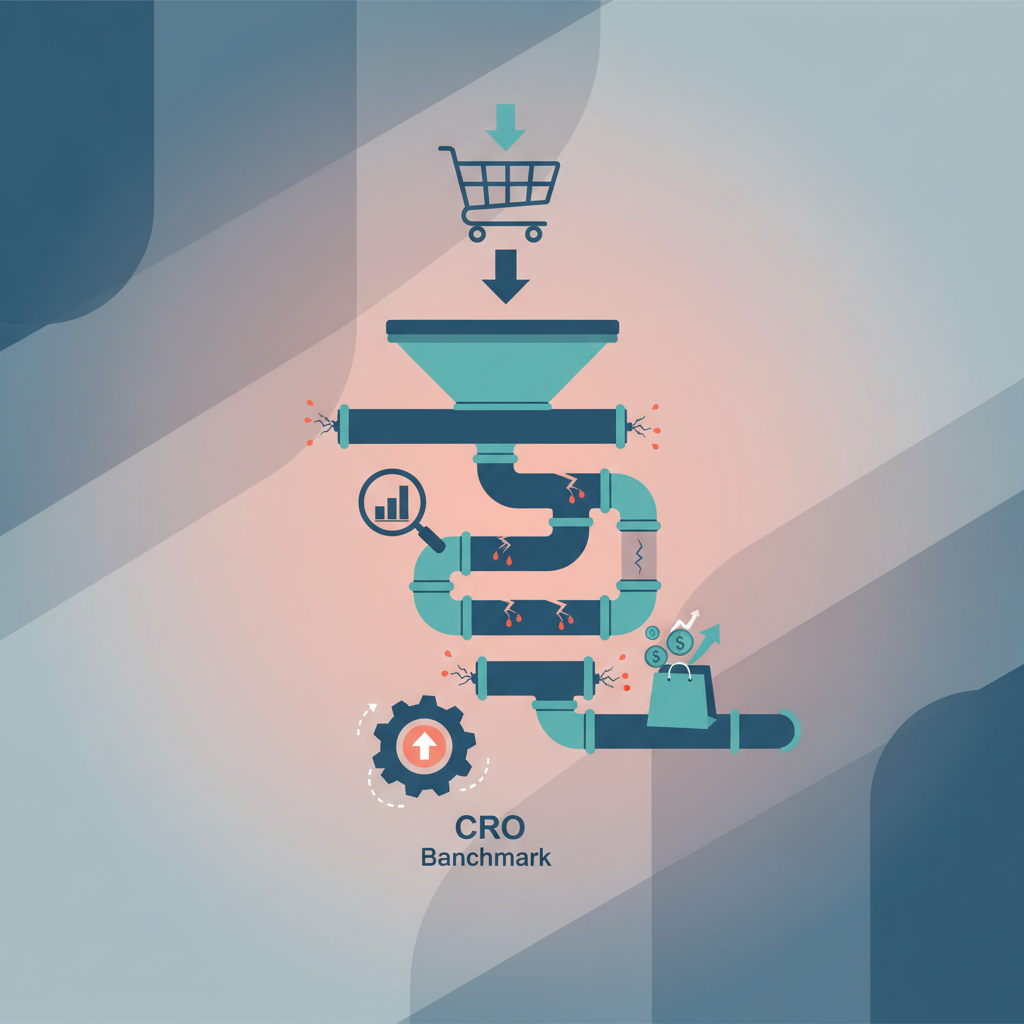
Low Conversion Rates: How CRO Benchmarks Can Identify & Fix Your Ecommerce Leaks
Sound familiar? You're pouring time, effort, and money into your ecommerce store, but visitors are bouncing before they buy. Low conversion rates are a silent killer for online businesses. But what if you could pinpoint why customers abandon carts or click away from your product pages? What if you could fix these issues and dramatically boost sales?
This guide cuts through the noise to help you understand the problem, explore the causes, and provide actionable solutions. We'll also show you how a powerful tool like CRO Benchmark can be your secret weapon.
The Problem: The Ecommerce Conversion Crisis
Low conversion rates are a major headache for ecommerce businesses. They mean lost revenue, wasted marketing spend, and a lack of customer engagement. Simply put, you're not turning enough website visitors into paying customers. This can stem from a variety of issues, from poor website design to a clunky checkout process.
Here's what most guides get wrong: they don't highlight the severity of the situation. Consider these sobering statistics:
- The average ecommerce conversion rate hovers around 2-3%. That means for every 100 visitors, only 2-3 actually buy something Invesp
- Cart abandonment rates are consistently high, often exceeding 70%. That's a massive chunk of potential revenue lost before the sale even happens Baymard Institute
- Mobile conversion rates are typically lower than desktop conversion rates. With mobile commerce booming, this is a critical area to improve Statista
These numbers paint a clear picture: many ecommerce businesses are struggling to convert visitors into customers. That's where a conversion rate optimization (CRO) strategy and tools like CRO Benchmark become essential.
Why This Happens: Uncovering the Root Causes
So, why are conversion rates so low? The reasons vary, but they often boil down to a few key areas:
1. Poor Website User Experience (UX)
If your website is hard to navigate, slow, or confusing, you'll drive potential customers away. A poor UX includes:
- Unclear navigation: Customers should find what they're looking for easily.
- Slow loading times: Website speed is critical. Customers will bounce if a page takes too long to load.
- Poor mobile optimization: With mobile traffic on the rise, a non-responsive website is a deal-breaker.
- Cluttered design: Too much information or distracting elements can overwhelm visitors.
2. Lack of Trust and Credibility
Online shoppers need to trust your website before they'll buy. This means:
- Missing or unclear contact information: Customers want to know they can reach you if they have a problem.
- Lack of security indicators: A secure website (HTTPS) is essential for building trust.
- Poorly written product descriptions: Vague or inaccurate descriptions raise suspicion.
- Absence of customer reviews or testimonials: Social proof is crucial for building credibility.
3. Complicated Checkout Process
A clunky or lengthy checkout process is a major cause of cart abandonment.
- Requiring account creation: Many customers prefer to checkout as guests.
- Asking for too much information: Only ask for essential information during checkout.
- Hidden costs: Unexpected shipping fees or taxes can deter customers.
- Limited payment options: Offer a variety of payment methods to cater to different customers.
4. High Shipping Costs and Limited Options
Shipping costs are a major factor in cart abandonment.
- Unexpected shipping costs: Customers often abandon carts when they see high shipping fees at the last minute.
- Limited shipping options: Offering multiple shipping options (e.g., standard, expedited) can cater to different customer needs.
- Lack of free shipping: Free shipping can be a powerful incentive to complete a purchase.
5. Poorly Optimized Product Pages
Your product pages are the heart of your ecommerce store. They need to be perfect to encourage conversions.
- Low-quality images: Use high-resolution images that showcase your products from all angles.
- Lack of detailed product information: Provide comprehensive descriptions, specifications, and FAQs.
- Absence of clear calls to action (CTAs): Use prominent "Add to Cart" and "Buy Now" buttons.
- Poorly written product descriptions: Ensure that your product descriptions are clear, concise, and persuasive.
Quick Fix: Immediate Steps to Improve Conversions
While a comprehensive CRO strategy takes time, some quick fixes can yield immediate results.
- Optimize your website speed: Use tools like Google PageSpeed Insights to identify and fix performance bottlenecks.
- Improve your checkout process: Simplify the checkout steps, offer guest checkout, and display shipping costs upfront.
- Add trust signals: Display security badges, customer reviews, and contact information prominently.
- Enhance your product pages: Use high-quality images, detailed descriptions, and clear CTAs.
Pro Tip: Run an A/B test on your checkout page to see if simplifying the form fields increases conversion rates.
Detailed Solutions: A Deep Dive into Conversion Optimization
To achieve sustainable improvements, you'll need a more in-depth CRO strategy. This involves:
1. User Research
Understand your target audience. Use:
- Website analytics: Analyze user behavior to identify pain points and areas for improvement.
- User surveys: Gather direct feedback from your customers about their experiences.
- Heatmaps and session recordings: Visualize how users interact with your website.
- Customer interviews: Conduct in-depth interviews to understand customer motivations and challenges.
2. Website Design & UX Optimization
- Ensure a clean and intuitive design: Make it easy for users to find what they need.
- Optimize for mobile: Ensure your website is responsive and mobile-friendly.
- Improve website loading speed: Optimize images, leverage browser caching, and minimize code.
- Use clear and concise copy: Write compelling product descriptions and CTAs.
3. Content Optimization
- Write high-quality product descriptions: Include all the necessary information, and use persuasive language.
- Use high-resolution images and videos: Showcase your products from all angles.
- Create engaging content: Use blog posts, videos, and infographics to attract and engage your audience.
4. A/B Testing
- Test different versions of your website elements: Headlines, CTAs, images, and form fields.
- Use A/B testing tools: Tools like CRO Benchmark can help you set up and run tests.
- Analyze the results: Identify which variations perform best and implement the changes.
5. Checkout Optimization
- Simplify the checkout process: Reduce the number of steps and form fields.
- Offer guest checkout: Allow customers to purchase without creating an account.
- Display shipping costs upfront: Avoid surprising customers with hidden fees.
- Offer multiple payment options: Cater to different customer preferences.
Tools That Help: Using the Power of CRO Benchmark
Optimizing your website for conversions can be complex, but the right tools can simplify the process and dramatically improve your results. One such tool is CRO Benchmark, an AI-driven conversion optimization audit designed to help you identify and fix conversion leaks in your ecommerce store.
CRO Benchmark analyzes 250+ criteria across your store, including CRO fundamentals, accessibility, data hygiene, customer sentiment, and competitive performance. In about 15 minutes, it uncovers your biggest conversion leaks and delivers prioritized fixes, tailored A/B testing ideas, and a clear CRO Index Score from 0–100.
Here's how CRO Benchmark can help you:
- Comprehensive Website Audit: CRO Benchmark performs a thorough audit of your website, identifying areas for improvement across various aspects, from design and UX to technical SEO and content.
- Prioritized Recommendations: The tool provides a list of prioritized fixes, so you know exactly where to start and what to focus on first.
- A/B Testing Ideas: CRO Benchmark suggests tailored A/B testing ideas based on your website's specific issues, helping you make data-driven decisions.
- Performance Benchmarking: Get a clear CRO Index Score to benchmark your performance against competitors and industry standards.
Quote: "CRO Benchmark has been instrumental in helping us identify and fix conversion bottlenecks. The prioritized recommendations and A/B testing ideas have saved us countless hours and significantly improved our conversion rates." - Ecommerce Manager
CRO Benchmark provides a structured approach to conversion optimization, making it easier for ecommerce brands, CRO specialists, and digital marketers to identify and fix conversion leaks. By using tools like CRO Benchmark, you can focus on the areas that need the most attention and see a significant return on your investment.
Prevention Tips: Maintaining High Conversion Rates
Once you've improved your conversion rates, it's crucial to maintain them. Here are some prevention tips:
- Regularly monitor your website analytics: Track key metrics like conversion rates, bounce rates, and cart abandonment rates.
- Conduct ongoing user research: Stay informed about your customers' needs and preferences.
- Continuously A/B test: Experiment with different website elements to optimize for conversions.
- Keep your website up-to-date: Ensure your website is secure, mobile-friendly, and optimized for speed.
- Stay informed about industry best practices: Keep up with the latest trends and techniques in CRO.
FAQs: Addressing Common Conversion Optimization Questions
Q: What is a good conversion rate? A: The average ecommerce conversion rate is around 2-3%. However, a "good" conversion rate depends on your industry, target audience, and business goals. It's essential to benchmark your performance and continuously strive for improvement.
Q: How long does it take to see results from CRO? A: The timeline for seeing results from CRO can vary. Some quick fixes can yield immediate improvements, while more comprehensive strategies may take several weeks or months to show significant results. A/B testing can help provide data to support the changes.
Q: What are the most important things to test on my website? A: Focus on testing elements that have a direct impact on conversions, such as your headlines, CTAs, product descriptions, checkout process, and pricing.
Q: How often should I run A/B tests? A: The frequency of A/B testing depends on your website traffic and resources. Ideally, you should be running tests continuously, prioritizing the areas that have the most impact on conversions.
Quote: "We've seen a significant increase in conversions since implementing the recommendations from CRO Benchmark. It's a game-changer for our business." - Digital Marketing Agency Owner
Ultimately: Turning Visitors into Customers
Low conversion rates are a common challenge for ecommerce businesses, but they're not insurmountable. By understanding the root causes, implementing effective solutions, and using powerful tools like CRO Benchmark, you can transform your website into a conversion machine. Focus on providing a seamless user experience, building trust, and optimizing every aspect of the customer journey. The results—increased sales, higher revenue, and a thriving online business—will be well worth the effort.
Actionable Takeaways:
- Conduct a thorough website audit. Identify areas for improvement in UX, content, and checkout process.
- Prioritize user research. Understand your target audience's needs and preferences.
- Implement A/B testing. Experiment with different website elements to optimize for conversions.
- Use CRO Benchmark. Leverage this tool to identify conversion leaks and get prioritized recommendations.
- Continuously monitor and optimize. Track your website's performance and make ongoing improvements.