
What Is Client Churn? A Clear Explanation for B2B Agencies
What Is Client Churn? A Clear Explanation for B2B Agencies
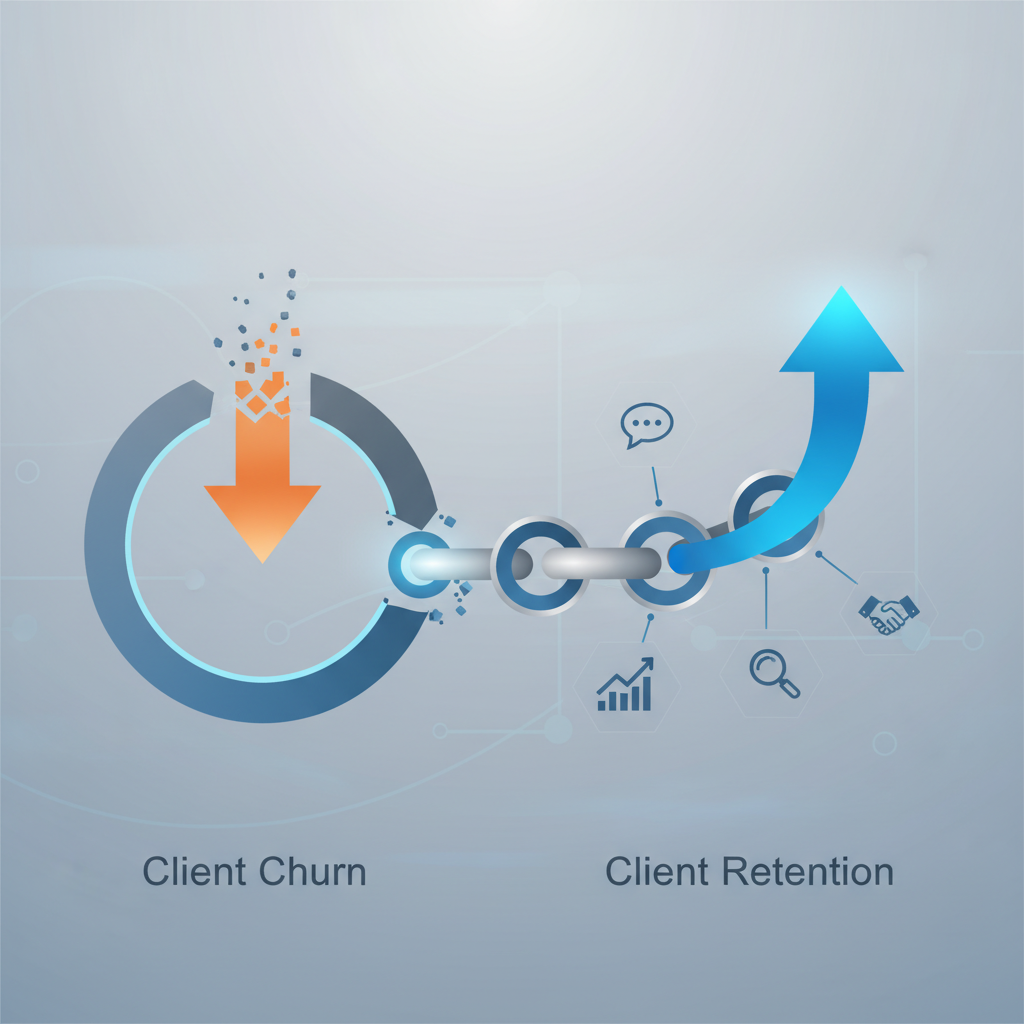
Client churn. It’s a term that strikes fear into the hearts of B2B agencies, and for good reason. It represents lost revenue, wasted resources, and the potential for a damaged reputation. But what exactly is client churn, and why should you, as an agency owner or marketing professional, care? This guide will break down the concept of client churn, its importance, real-world examples, and how to prevent it.
Why Client Churn Matters
Client churn, in its simplest form, refers to the rate at which your clients stop using your services over a given period. It's a critical metric because it directly impacts your agency’s profitability and long-term sustainability. High churn rates can quickly erode your client base, making it difficult to maintain a steady revenue stream and hindering growth.
Consider these statistics:
- The average churn rate for SaaS companies is between 3-8% annually. Source: ProfitWell While this is specific to SaaS, it highlights the general challenge of client retention. Agencies are service-based businesses like SaaS, so this is a useful benchmark.
- Reducing churn by just 5% can increase profits by 25-125%. Source: Bain & Company This demonstrates the significant impact even small improvements in client retention can have on your bottom line.
- Acquiring a new client can cost 5 to 25 times more than retaining an existing one. Source: Harvard Business Review This underscores the financial inefficiency of constantly replacing lost clients.
Preventing client churn isn't just about avoiding revenue loss; it's about fostering long-term relationships and building a thriving agency.
Real-World Examples
Let’s look at some real-world scenarios to understand how client churn manifests in B2B agencies:
Scenario 1: The Disappearing Client. A branding agency loses a client who, despite initial positive results, becomes unresponsive and eventually stops returning calls. The agency had been providing monthly reports and regular check-ins, but the client’s engagement had been steadily declining. The root cause? Poor communication and a lack of proactive updates, as highlighted in a recent Reddit post: “Clients were leaving because communication dropped off.” Source: Reddit
Scenario 2: The Price-Sensitive Client. An agency specializing in SEO loses a client who is always shopping for the lowest price. This client, after a year of successful campaigns, jumps ship to a competitor offering a slightly lower rate, even though the competitor's results are less impressive. This highlights the importance of demonstrating value beyond just the cost of services.
Scenario 3: The Mismatched Expectations Client. An agency that focuses on content marketing loses a client because the client had unrealistic expectations about the speed of results. The agency delivered high-quality content, but the client, impatient for immediate ROI, decided to switch to an agency promising faster outcomes, even if the methods were less sustainable or effective.
How Client Churn Works: The Key Drivers
Understanding the drivers of client churn is crucial for prevention. Here are some of the most common reasons:
- Poor Communication: This is a major factor, as seen in the Reddit example above. Lack of regular updates, slow response times, and a failure to proactively address client concerns can quickly erode trust and lead to churn.
- Lack of Value: Clients need to perceive the value of your services. If they don’t see a return on their investment, they'll likely look for alternatives. This means demonstrating ROI, providing regular reports, and highlighting the impact of your work.
- Unrealistic Expectations: Clients with unrealistic expectations about timelines or results are prone to churn. Setting clear expectations from the outset and managing them throughout the relationship is crucial.
- Poor Client-Agency Fit: Not every client is a good fit for every agency. Mismatched cultures, communication styles, or service offerings can lead to dissatisfaction and churn.
- Pricing Issues: While not always the primary driver, pricing can contribute to churn. If your pricing isn’t competitive or doesn't align with the value you deliver, clients may seek more affordable options.
- Lack of Proactive Support: Clients who feel neglected or unsupported are more likely to churn. Proactive support, regular check-ins, and a willingness to go the extra mile can build strong relationships.
Common Use Cases: Client Churn in Action
Client churn can impact various types of B2B agencies. Here are a few examples:
- Marketing Agencies: Marketing agencies, particularly those offering digital marketing services, are highly susceptible to churn. Clients may leave due to lack of results, poor communication, or a perceived lack of value. For instance, an agency providing SEO services may see clients churn if they don't see quick enough improvements in rankings.
- Branding Agencies: Branding agencies often face churn if clients are dissatisfied with the brand's performance in the market. This could be due to a change in the client's business strategy, poor market reception, or a lack of ongoing support.
- Web Design Agencies: Web design agencies can experience churn if the websites they design don't meet client expectations or if the client feels the site is not generating enough leads or sales.
- Software Development Agencies: Software development agencies might face churn if a project is not delivered on time, within budget, or to the client's specifications.
Pro Tip: Regularly survey your clients to gauge satisfaction and identify potential churn risks before they become a problem.
Mistakes to Avoid
Preventing client churn requires a proactive approach. Here are some common mistakes agencies make that contribute to churn:
- Failing to Set Clear Expectations: From the outset, set clear expectations about deliverables, timelines, and results. Misaligned expectations are a major cause of churn.
- Poor Communication: As mentioned earlier, poor communication is a deal-breaker. Not keeping clients informed about the progress of their projects, failing to respond promptly to their inquiries, and not providing regular updates can quickly erode trust.
- Neglecting Client Relationships: Don't treat clients as mere transactions. Invest in building relationships. Get to know your clients, their businesses, and their goals.
- Not Demonstrating Value: If clients don't see a return on their investment, they'll likely leave. Regularly demonstrate the value of your services through detailed reports, data-driven insights, and clear communication of results.
- Ignoring Feedback: Pay attention to client feedback, both positive and negative. Use this feedback to improve your services and address any concerns.
- Overpromising and Underdelivering: Don't make promises you can't keep. Be realistic about what you can achieve and always strive to exceed client expectations.
FAQs About Client Churn
Here are some frequently asked questions about client churn:
Q: What is a good client retention rate? A: A good client retention rate varies depending on the industry, but generally, a rate of 80% or higher is considered excellent. Benchmarking against industry averages is crucial.
Q: How do you calculate client churn rate? A: The client churn rate is calculated by dividing the number of clients lost during a specific period by the number of clients at the beginning of that period. For example, if you started the year with 100 clients and lost 10, your annual churn rate is 10%.
Q: How can I predict client churn? A: Use data analysis and client feedback to identify clients at risk of churning. Monitor client engagement, track communication frequency, and analyze project performance. Also, proactively solicit feedback to identify any underlying issues.
Q: What are the main reasons for client churn in B2B? A: The main reasons include poor communication, lack of value, unrealistic expectations, poor client-agency fit, pricing issues, and lack of proactive support.
Q: How do I improve client retention? A: Improve client retention by focusing on clear communication, demonstrating value, setting realistic expectations, building strong client relationships, proactively addressing issues, and providing excellent service.
Remember: Building a strong, lasting relationship with your clients is the best defense against churn.
Conclusion: Preventing Client Churn
Client churn is a significant challenge for B2B agencies, but it's also a problem that can be effectively managed and reduced. By understanding the causes of churn, implementing proactive strategies, and focusing on building strong client relationships, agencies can significantly improve their client retention rates, boost profitability, and ensure long-term success.
Takeaways for B2B Agencies
- Prioritize Communication: Implement a clear and consistent communication strategy, ensuring regular updates and responsiveness.
- Demonstrate Value: Regularly report on the ROI of your services, highlighting successes and demonstrating the impact of your work.
- Set Realistic Expectations: Clearly define project scopes, timelines, and expected outcomes from the beginning.
- Build Strong Relationships: Invest in getting to know your clients and their businesses, fostering a collaborative partnership.
- Be Proactive: Anticipate client needs, address concerns promptly, and proactively offer support.
Ultimately, understanding and addressing client churn is crucial for any B2B agency seeking sustainable growth. By focusing on these key areas, agencies can build stronger client relationships, drive better results, and create a thriving business.