
Attribution Modeling Showdown: Comparing Different Approaches for Ecommerce Success
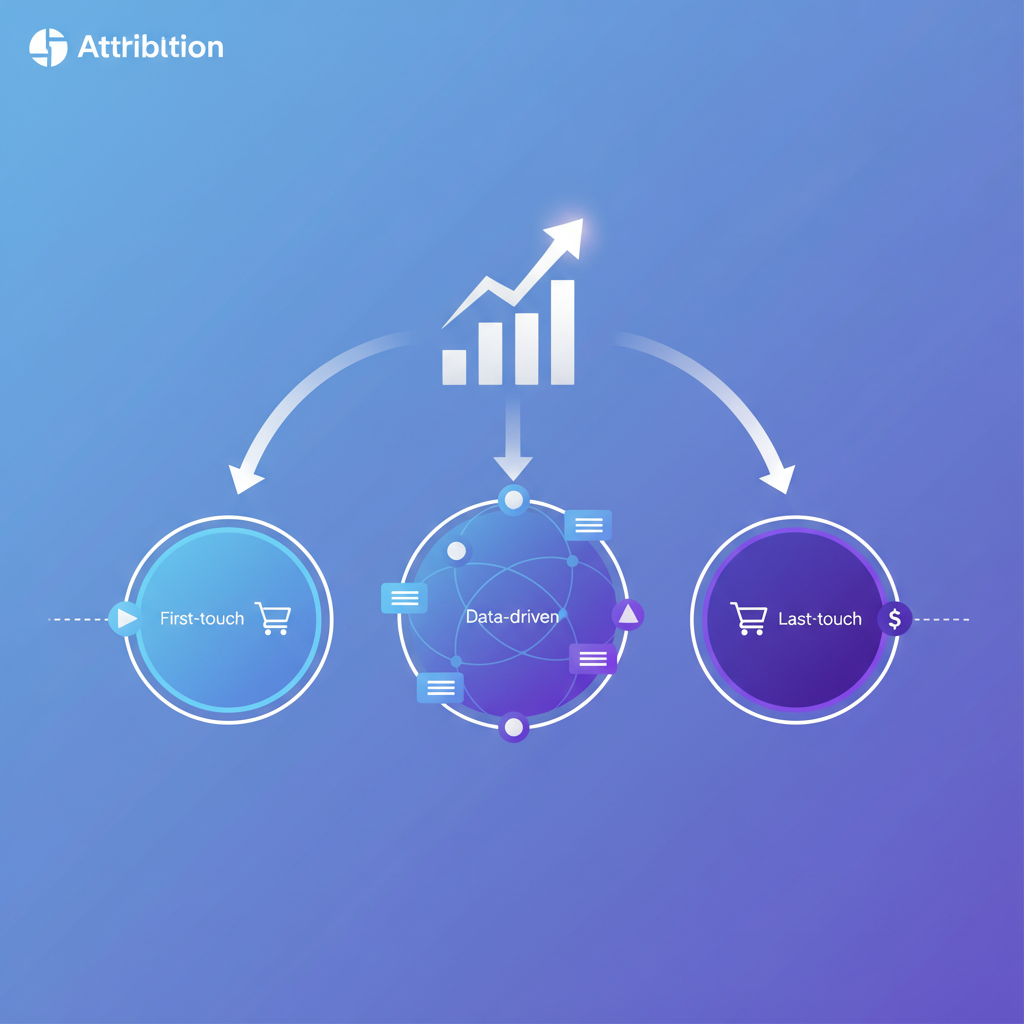
Attribution Modeling Showdown: Comparing Different Approaches for Ecommerce Success
Is your marketing budget being spent effectively? The digital marketing world is constantly changing, and understanding the customer journey is more critical than ever. Accurately attributing conversions has become a major headache for eCommerce businesses. The way people buy things has shifted dramatically, with customers bouncing between different touchpoints before they finally buy something, making it tough to track and measure the impact of marketing efforts. Sound familiar? As one Reddit user noted, "I keep seeing people blame GA4, dashboards, or tracking setups when attribution starts looking weird." Source: Reddit
This guide will help you navigate the world of attribution modeling, comparing different approaches so you can gain clarity and optimize your marketing strategies. We'll examine the strengths and weaknesses of each model, helping you make informed decisions about how to best allocate your resources and understand what truly drives your sales.
The Problem: A Shifting Buyer Journey
The buyer journey has become a tangled mess. Customers no longer take a straight path from awareness to purchase. Instead, they interact with brands across multiple channels, devices, and touchpoints, often researching products and comparing options before making a decision. This complexity makes it difficult to accurately attribute conversions to the specific marketing activities that influenced the customer's final purchase.
Most attribution models assume humans do the comparison work. Source: Reddit
Why Attribution Modeling Matters
- Optimized Marketing Spend: Accurate attribution helps you identify which marketing channels and campaigns are most effective in driving conversions, allowing you to allocate your budget more efficiently.
- Improved ROI: By understanding the impact of each touchpoint, you can optimize your marketing efforts to maximize your return on investment (ROI).
- Data-Driven Decision Making: Attribution modeling provides valuable insights into customer behavior, enabling you to make data-driven decisions about your marketing strategy.
- Better Customer Understanding: By analyzing the customer journey, you can gain a deeper understanding of your target audience and tailor your messaging and offers to their needs.
Quick Comparison Table
| Feature | First-Touch Attribution | Last-Touch Attribution | Linear Attribution | Time Decay Attribution | Position-Based Attribution | Data-Driven Attribution |
|---|---|---|---|---|---|---|
| Model | First interaction | Last interaction | Equal credit | Credit over time | First/Last + credit | Based on data |
| Complexity | Simple | Simple | Moderate | Moderate | Moderate | Complex |
| Accuracy | Low | Low | Moderate | Moderate | Moderate | High |
| Use Case | Brand awareness | Sales-focused | General overview | Long sales cycles | Balanced view | Advanced analysis |
| ----------------- | ----------------------- | ---------------------- | ------------------ | ------------------------ | -------------------------- | ------------------------- |
Overview of Each Attribution Model
1. First-Touch Attribution
First-touch attribution gives 100% of the credit for a conversion to the first touchpoint a customer interacted with. This model is useful for understanding which channels are most effective at generating initial awareness and driving traffic to your website. For example, if a customer first clicks on a Facebook ad and later converts, the Facebook ad gets all the credit.
- Pros: Simple to implement and understand; highlights the importance of top-of-funnel marketing.
- Cons: Ignores the impact of subsequent touchpoints; may undervalue channels that contribute to the final conversion.
2. Last-Touch Attribution
Last-touch attribution gives 100% of the credit to the last touchpoint a customer interacted with before converting. This model is ideal for understanding which channels are most effective at closing sales. For instance, if a customer clicks on a Google Shopping ad just before purchasing, the Google Shopping ad gets all the credit.
- Pros: Simple to implement; focuses on the channels that directly lead to conversions.
- Cons: Ignores the impact of earlier touchpoints; may undervalue channels that contribute to awareness and consideration.
3. Linear Attribution
Linear attribution distributes credit equally across all touchpoints in the customer journey. This model provides a balanced view of the customer journey, recognizing the contribution of each channel. For example, if a customer interacts with three touchpoints before converting, each touchpoint receives 33.33% of the credit.
- Pros: Fairly simple to understand; provides a balanced perspective on the customer journey.
- Cons: May not accurately reflect the true impact of each touchpoint; assumes all touchpoints are equally important.
4. Time Decay Attribution
Time decay attribution gives more credit to touchpoints that occur closer to the conversion. This model recognizes that touchpoints closer to the purchase decision are more likely to influence the customer. For example, a touchpoint one day before the conversion might receive more credit than a touchpoint a week before.
- Pros: Accounts for the recency of touchpoints; can be effective in understanding the impact of recent marketing efforts.
- Cons: Requires careful configuration of time decay parameters; may not be suitable for all types of customer journeys.
5. Position-Based Attribution
Position-based attribution gives a certain percentage of credit to the first and last touchpoints (typically 40% each) and distributes the remaining credit equally across the middle touchpoints (20%). This model combines the benefits of first-touch and last-touch attribution while also acknowledging the contribution of other touchpoints.
- Pros: Provides a balanced view of the customer journey; highlights the importance of both initial awareness and final conversions.
- Cons: Requires careful consideration of credit allocation; may not be suitable for all types of customer journeys.
6. Data-Driven Attribution
Data-driven attribution uses machine learning to analyze the customer journey and assign credit to touchpoints based on their actual impact on conversions. This model is the most accurate but also the most complex. It requires significant data and technical expertise.
- Pros: Most accurate attribution model; provides the most granular insights into customer behavior.
- Cons: Complex to implement; requires significant data and technical expertise.
Pro Tip: Start with a simpler model like Linear or Time Decay to get a baseline understanding, then move towards more complex models as your data and expertise grow.
Feature-by-Feature Comparison
Now, let's take a closer look at the features of each model:
Data Requirements
- First-Touch/Last-Touch: Minimal data required; can be implemented with basic tracking.
- Linear: Requires tracking of all touchpoints in the customer journey.
- Time Decay: Requires tracking of all touchpoints and the ability to measure the time elapsed between touchpoints.
- Position-Based: Requires tracking of all touchpoints.
- Data-Driven: Requires a large volume of high-quality data and advanced analytics capabilities.
Implementation Complexity
- First-Touch/Last-Touch: Simple to implement; can be set up in most analytics platforms.
- Linear/Time Decay/Position-Based: Moderate complexity; requires some configuration in your analytics platform.
- Data-Driven: High complexity; requires technical expertise and potentially a dedicated data science team.
Accuracy
- First-Touch/Last-Touch: Low accuracy; may not reflect the true impact of each touchpoint.
- Linear/Time Decay/Position-Based: Moderate accuracy; provides a more balanced view of the customer journey.
- Data-Driven: High accuracy; uses machine learning to analyze the customer journey and assign credit based on actual impact.
Insights Provided
- First-Touch: Provides insights into which channels are most effective at generating initial awareness.
- Last-Touch: Provides insights into which channels are most effective at closing sales.
- Linear: Provides a balanced view of the customer journey and highlights the contribution of each channel.
- Time Decay: Provides insights into the impact of recent marketing efforts.
- Position-Based: Provides a balanced view of the customer journey, highlighting both initial awareness and final conversions.
- Data-Driven: Provides the most granular insights into customer behavior and the true drivers of conversions.
Pricing
- First-Touch/Last-Touch/Linear/Time Decay/Position-Based: These models are typically available as part of standard analytics platforms like Google Analytics, often at no additional cost.
- Data-Driven: Data-driven attribution may require a paid analytics platform or custom implementation, which can involve significant costs.
Best For
- First-Touch: Best for businesses focused on brand awareness and lead generation.
- Last-Touch: Best for businesses focused on direct sales and conversions.
- Linear: Best for businesses that want a balanced view of the customer journey and want to give equal credit to each touchpoint.
- Time Decay: Best for businesses with long sales cycles or those that want to emphasize the importance of recent touchpoints.
- Position-Based: Best for businesses that want a balanced view of the customer journey and want to highlight both initial awareness and final conversions.
- Data-Driven: Best for businesses with a large volume of data and the resources to implement a complex solution.
Our Verdict
Choosing the right attribution model depends on your specific business goals, the complexity of your customer journey, and the resources you have available. There is no one-size-fits-all solution.
- Start Simple, Then Iterate: Begin with a simpler model like Linear or Time Decay to get a baseline understanding of your customer journey. As you gather more data and develop your analytical skills, you can transition to more sophisticated models, like data-driven attribution.
- Consider Your Goals: If your primary goal is to increase brand awareness, first-touch attribution might be a good starting point. If your primary goal is to drive sales, last-touch attribution may be more appropriate.
- Analyze the Data: Regularly analyze the data from your chosen attribution model to identify trends and patterns in customer behavior. Use these insights to optimize your marketing campaigns and improve your ROI.
Warning: Be aware of the limitations of each model. No model perfectly captures the complexity of the customer journey. However, by choosing the right model and continuously analyzing your data, you can gain valuable insights into your marketing performance and make data-driven decisions to improve your results.
Actionable Takeaways
- Assess Your Current Setup: Determine which attribution model you're currently using (if any) and evaluate its effectiveness. Are you getting the insights you need to optimize your marketing spend?
- Define Your Goals: What are your primary marketing objectives? Are you focused on brand awareness, lead generation, or direct sales? Your goals should guide your choice of attribution model.
- Choose the Right Model: Select the attribution model that best aligns with your goals and the complexity of your customer journey. Consider starting with a simpler model and gradually transitioning to more sophisticated options.
- Implement and Track: Set up your chosen attribution model in your analytics platform and start tracking your data. Ensure you have the necessary tracking in place to capture all relevant touchpoints.
- Analyze and Optimize: Regularly analyze your data to identify trends, patterns, and areas for improvement. Use these insights to optimize your marketing campaigns, improve your ROI, and make data-driven decisions.
By understanding the different attribution models and choosing the right one for your business, you can gain valuable insights into your marketing performance and make data-driven decisions to drive conversions and grow your business.