
3 AI-Powered Ecommerce Mistakes That Cost You Conversions (And How to Fix Them)
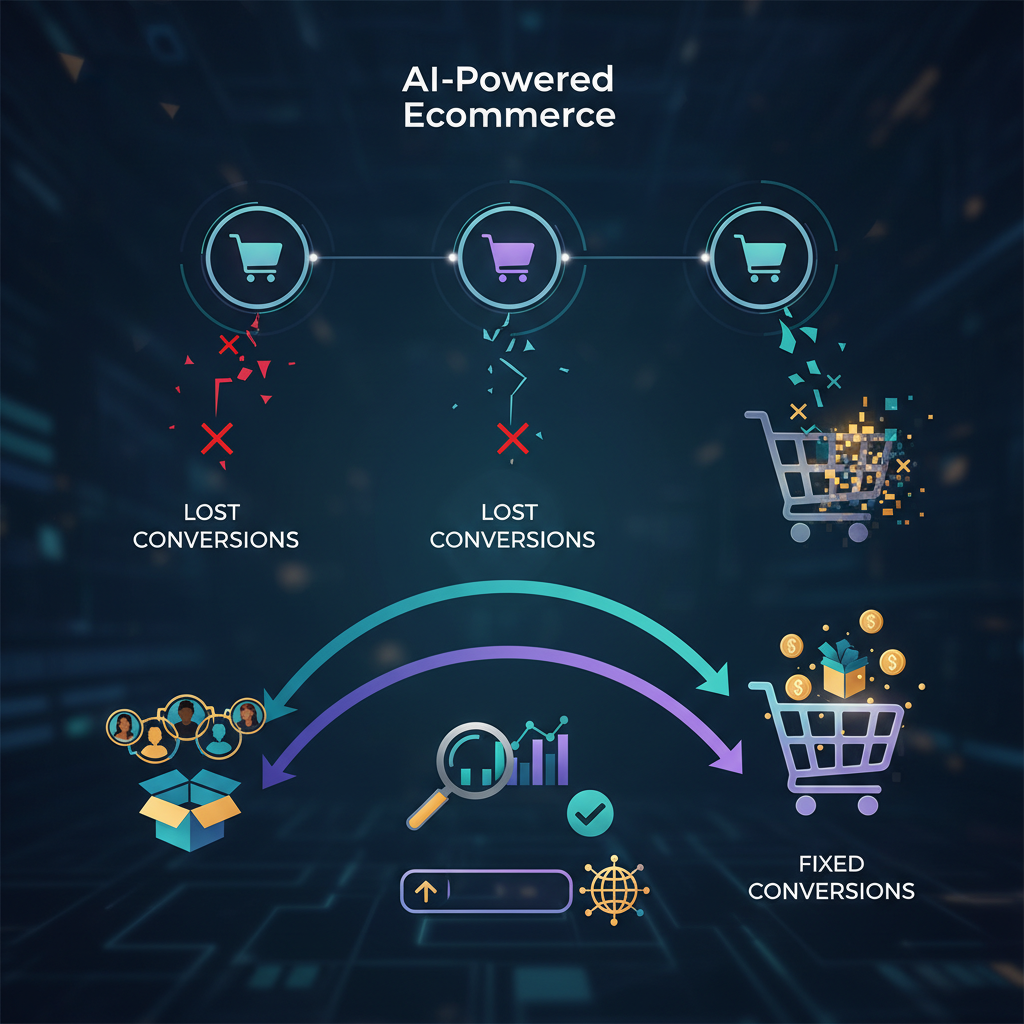
In the ever-evolving world of eCommerce, staying ahead means embracing the power of Artificial Intelligence (AI). From personalized shopping experiences to sophisticated A/B testing, AI is reshaping how businesses interact with customers and drive conversions. However, many eCommerce brands are missing out on significant opportunities, and even making critical missteps, when it comes to using AI for conversion rate optimization (CRO). This guide for eCommerce brands will uncover three critical AI-powered mistakes that are costing you conversions, and provide actionable solutions to help you optimize your website for success in 2026.
Why These Mistakes Matter
In 2026, the eCommerce landscape is more competitive than ever. Consumers expect personalized experiences, seamless navigation, and instant gratification. AI is no longer a luxury; it's a necessity. Failing to harness the power of AI in your CRO strategy can lead to:
- Lost Conversions: Customers are more likely to abandon their carts or shop elsewhere if they don't find what they're looking for quickly or if their experience is not personalized. A study by Statista estimates that approximately 70% of online shopping carts are abandoned, and poor personalization is a major contributor.
- Decreased Customer Loyalty: Without AI-driven insights, you may miss opportunities to understand your customers' needs and preferences. This can lead to a generic, unengaging experience that drives customers to competitors.
- Missed Revenue Opportunities: AI can help you identify high-value customers, optimize pricing, and recommend products that customers are likely to purchase. Without these tools, you're leaving money on the table.
So, let's look at the three critical mistakes.
Mistake #1: Ignoring AI-Powered Personalization + The Fix
One of the most significant ways AI is transforming eCommerce is through hyper-personalization. This goes beyond simply addressing customers by name; it involves tailoring every aspect of the shopping experience to individual preferences and behaviors. This includes product recommendations, content, and even the layout of the website. Many eCommerce businesses fail to implement robust personalization strategies, missing out on major conversion boosts.
The Problem: Many eCommerce websites offer a one-size-fits-all experience. They don't use AI to analyze customer data, understand individual preferences, and tailor the shopping experience accordingly. This can lead to irrelevant product recommendations, a lack of engaging content, and ultimately, frustrated customers.
Example: Imagine an online clothing store that doesn't use AI to suggest clothing based on a customer's past purchases, browsing history, or preferred styles. The customer has to sift through countless options, wasting time and potentially missing out on items they'd love. This can lead to a poor user experience and lost sales.
Statistics: According to Forbes, personalized experiences can lead to an average increase of 10% in sales. Furthermore, McKinsey found that companies that personalize at scale see 5-15% revenue lift.
The Fix: Implement AI-Driven Personalization
To overcome this, eCommerce brands must embrace AI-powered personalization. Here's how:
- Implement a Recommendation Engine: Use AI-powered recommendation engines to suggest products based on a customer's browsing history, purchase history, and other data points. Examples include "Customers who bought this also bought..." or "Recommended for you."
- Personalize Content: Tailor website content, including banners, product descriptions, and blog posts, to individual customer preferences. Use AI to dynamically adjust content based on factors like location, demographics, and past behavior.
- Optimize Email Marketing: Segment your email list and send personalized email campaigns based on customer behavior. Use AI to determine the best time to send emails and the most relevant content to include.
- Dynamic Pricing: Use AI to adjust pricing based on demand, customer behavior, and competitor pricing. This can help you maximize revenue and stay competitive.
Mistake #2: Not Leveraging AI for A/B Testing + The Fix
A/B testing is a critical component of CRO, allowing businesses to test different versions of a webpage to see which performs best. However, traditional A/B testing can be time-consuming, resource-intensive, and often yields inconclusive results. AI can significantly improve the efficiency and effectiveness of A/B testing, yet many eCommerce brands fail to fully use this powerful tool.
The Problem: Traditional A/B testing often involves testing only a few variations at a time, which can be slow and may not identify the most effective changes. It also requires significant manual effort to set up, analyze results, and draw meaningful conclusions.
Example: An eCommerce store wants to test a new call-to-action (CTA) button on its product pages. In a traditional A/B test, they might test only two or three different button colors. This limits the scope of the test and may not identify the optimal CTA design.
Statistics: Convertize reports that the average conversion rate lift from A/B testing is between 10-20%. However, with AI-powered A/B testing, the potential for improvement is even greater, as AI can identify complex patterns and optimize tests more effectively.
The Fix: Embrace AI-Powered A/B Testing
AI can improve your A/B testing strategy. Here's how:
- Automated Testing: Use AI-powered tools that automatically generate and test multiple variations of a webpage, significantly accelerating the testing process.
- Predictive Analysis: AI can analyze data to predict which variations are most likely to s쳮d, helping you prioritize your testing efforts.
- Personalized Testing: AI allows you to personalize A/B tests for different customer segments, leading to more relevant and effective results. This means displaying different versions of a page to different customer groups based on their behavior.
- Faster Iteration: AI can provide real-time insights and recommendations, allowing you to iterate on your tests more quickly and optimize your website for maximum conversions.
| Feature | Traditional A/B Testing | AI-Powered A/B Testing |
|---|---|---|
| Test Variations | Limited | Unlimited (AI-generated) |
| Testing Speed | Slow | Fast |
| Analysis | Manual | Automated, Predictive |
| Personalization | Limited | Highly Personalized |
| Efficiency | Lower | Higher |
Mistake #3: Poor Website Visibility in Search Results + The Fix
Getting found by potential customers is the first step in driving conversions. Even with a great website and compelling products, if your website isn't visible in search results, you're missing out on a significant source of traffic and revenue. AI can help in improving search engine optimization (SEO) and website visibility, yet many eCommerce brands fail to use this power.
The Problem: Many eCommerce sites suffer from poor SEO, making it difficult for potential customers to find them through search engines like Google. This can be due to a variety of factors, including poor keyword research, unoptimized content, and a lack of technical SEO best practices.
Example: An eCommerce store selling outdoor gear might not be using relevant keywords in its product descriptions or meta tags. As a result, when potential customers search for terms like "hiking boots" or "camping tents," the store's website doesn't appear in the search results.
Statistics: According to Search Engine Journal, the first organic search result gets an average of 27.6% of all clicks. Ranking on the first page of Google is crucial for driving traffic and conversions.
The Fix: Optimize Your Website for Search Engines with AI
AI can help you improve your website's visibility in search results. Here's how:
- Keyword Research: Use AI-powered tools to identify relevant keywords that potential customers are using to search for products like yours. These tools can analyze search trends, competitor data, and other factors to help you optimize your content.
- Content Optimization: Leverage AI to optimize your website content, including product descriptions, blog posts, and meta tags. AI can analyze your content and suggest improvements to enhance its relevance and readability.
- Technical SEO: Use AI to automate technical SEO tasks, such as identifying and fixing broken links, optimizing website speed, and improving site structure. This can help search engines crawl and index your website more effectively.
- AI-Driven Content Creation: Explore AI tools that can help you create high-quality, SEO-friendly content, such as product descriptions, blog posts, and articles. This can save you time and resources while improving your website's visibility.
Subtle tool mention: Looking to streamline your CRO efforts? Consider using the power of CRO Benchmark. This AI-driven conversion optimization audit analyzes over 250 criteria across your eCommerce store, identifies areas for improvement, and provides actionable recommendations to boost your conversions. In just 15 minutes, you can uncover your biggest conversion leaks and create a plan to implement the changes and see your conversion rates rise.
Prevention Checklist
To avoid these costly AI-powered eCommerce mistakes, create a plan that covers the following areas:
- Audit Your Current Strategy: Evaluate your current use of AI in CRO. Are you personalizing the customer experience? Are you A/B testing effectively? Is your website easily found in search results?
- Set Clear Goals: Define your conversion goals and then determine how AI can help you achieve them. What specific improvements are you looking to make?
- Invest in the Right Tools: Research and select the AI-powered tools that align with your goals and budget. Consider factors like ease of use, features, and integration capabilities.
- Train Your Team: Ensure your team has the skills and knowledge to effectively use AI tools and implement your CRO strategy. Invest in training and professional development.
- Continuously Monitor and Optimize: Regularly monitor your website's performance and make adjustments to your AI-powered CRO strategy as needed. A/B test, analyze data, and refine your approach to maximize results.
By avoiding these three common mistakes and embracing the power of AI, eCommerce brands can get significant conversion gains and drive sustainable growth in 2026. The key is to be proactive, strategic, and committed to continuous improvement.
Actionable Takeaways
- Embrace Personalization: Implement AI-driven personalization strategies to create tailored shopping experiences that resonate with your customers.
- Automate A/B Testing: Use AI to automate and optimize your A/B testing efforts, increasing efficiency and effectiveness.
- Improve SEO: Utilize AI-powered tools to improve your website's visibility in search results and drive more organic traffic.
- Stay Informed: Keep up-to-date with the latest AI trends and advancements in eCommerce to stay ahead of the competition.
- Get a CRO Audit: Use tools such as the CRO Benchmark to quickly identify areas of improvement and gain a competitive edge.